
Dealer school is the most common path into casino dealing. These programs teach the technical skills, procedures, and game knowledge needed to pass auditions and work on casino floors.
Choosing the right school and maximizing your training significantly affects your career launch.
What Dealer School Teaches
Technical Skills
Card handling:
- Shuffling (riffle, strip, box)
- Pitching cards accurately
- Card control and protection
- Working with multiple decks
Chip handling:
- Cutting chips accurately
- Stacking and moving chips
- Quick counting
- Color changes
Game procedures:
- Specific rules for each game
- Dealing sequences
- Payout procedures
- Bet handling
Game Knowledge
Rules: Complete rules for each game taught, betting options, decision points, house procedures.
Payouts: All payout calculations for each game. Quick mental math for various bet sizes.
Variations: Common rule variations (soft 17, blackjack payouts, surrender, etc.).
Professional Skills
Player interaction:
- Communication basics
- Handling questions
- Managing difficult situations
Game protection:
- Recognizing irregularities
- Proper procedures that prevent cheating
- When to call supervisors
Casino culture:
- Workplace expectations
- Professional conduct
- Industry terminology
School Duration and Structure
Program Lengths
Blackjack only: 2-4 weeks
- Just blackjack procedures
- Fastest path to dealing
- Most limited job options
Standard program: 6-8 weeks
- Blackjack + 1-2 additional games
- Typical combination: blackjack, craps, roulette
- Good balance of time and versatility
Comprehensive program: 10-14 weeks
- All major games
- Maximum versatility
- Higher cost, longer commitment
Daily Structure
Typical schedule:
- 4-6 hours daily
- 5 days per week
- Combination of instruction and practice
Learning progression:
- Game rules and theory
- Physical skill development
- Procedure drilling
- Practice dealing
- Mock auditions
Practice Time
In-class practice: Most time is hands-on practice at actual gaming tables.
Outside practice: Additional practice at home or with study groups accelerates skill development. Some schools provide practice supplies.
Costs and Financing
Tuition Ranges
Budget programs: $500-$1,000
- Often just blackjack
- Shorter duration
- May lack placement services
Mid-range programs: $1,000-$2,000
- Multiple games
- Better equipment and instruction
- Some placement assistance
Premium programs: $2,000-$4,000
- Comprehensive game coverage
- Strong industry connections
- Job placement services
- Professional production quality
What's Included
Standard inclusions:
- Instruction time
- Practice table access
- Training materials
- Basic supplies
Variable inclusions:
- Gaming license assistance
- Job placement services
- Practice chips/cards to keep
- Refresher training
Financing Options
Payment plans: Many schools offer payment plans, partial payment at enrollment, balance over time.
Community programs: Some community colleges offer dealing programs at lower cost.
VA benefits: Some schools accept GI Bill benefits for veteran students.
Casino-sponsored training: Some casinos offer free training with employment commitment (see alternative paths below).
Choosing a Quality School
Essential Criteria
Proper equipment:
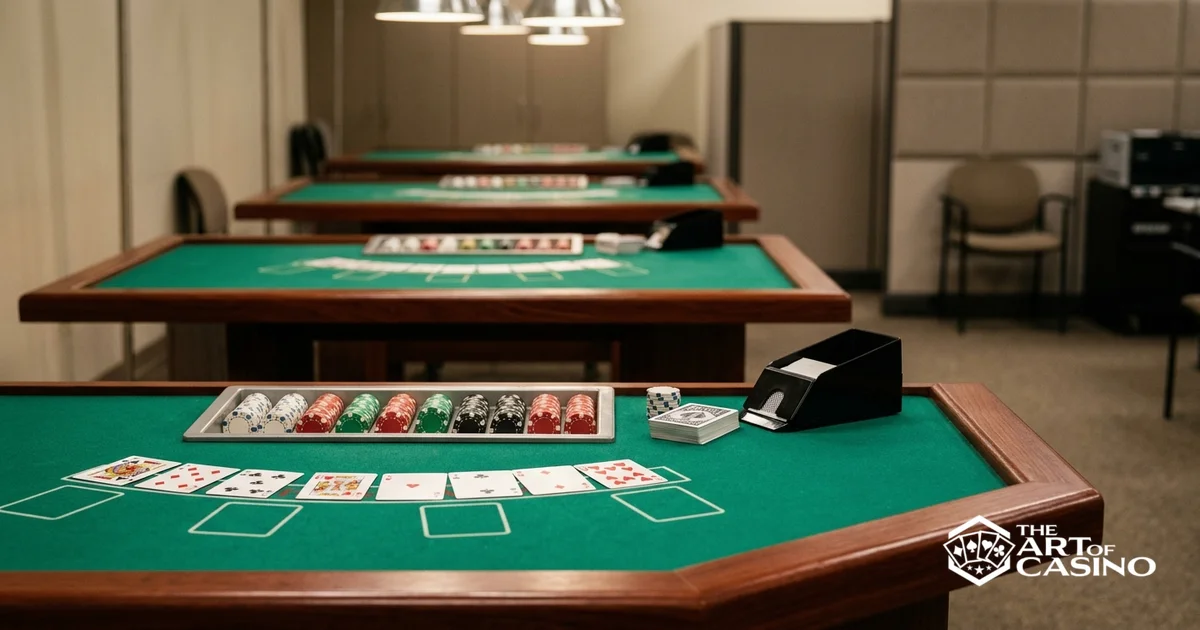
- Actual casino-style tables, not simulations
- Professional-grade chips and cards
- Multiple tables for adequate practice time
Qualified instructors:
- Recent actual casino dealing experience
- Teaching ability, not just dealing ability
- Multiple instructors for different games
Realistic training:
- Practice scenarios that match real casino conditions
- Mock auditions with constructive feedback
- Game protection awareness
Red Flags
Warning signs:
- No actual gaming tables
- Instructors without recent casino experience
- Promises of guaranteed employment
- Extremely short programs claiming comprehensive coverage
- No opportunity to visit before enrolling
Research Steps
Before enrolling:
- Visit the school in person
- Observe a class if possible
- Talk to current students
- Contact recent graduates
- Research job placement success
- Check for complaints or issues
Questions to Ask
Essential questions:
- What games are taught and how thoroughly?
- What's the student-to-instructor ratio?
- What placement services are offered?
- What do graduates typically earn after placement?
- Can I speak with recent graduates?
- What if I need additional practice time?
Alternative Paths
Casino In-House Training
What it is: Some casinos train dealers internally rather than hiring from outside schools.
Advantages:
- Free training (paid during training at some properties)
- Guaranteed job upon completion
- Training on actual equipment you'll use
Disadvantages:
- Limited game selection usually
- Commitment to that property required
- Competitive selection process
Finding programs: Watch casino job postings for "dealer trainee" or "dealer apprentice" positions.
Community College Programs
What it is: Some community colleges offer dealing programs as vocational training.
Advantages:
- Lower cost (especially for residents)
- Academic environment
- May include general education credits
Disadvantages:
- May lack industry connections
- Equipment quality varies
- Instructors may be less current
Learning On the Job
Starting small: Some smaller casinos will hire inexperienced dealers and train on the job.
Where this works:
- Small regional casinos
- Charity gaming operations
- Private card rooms (where legal)
Limitations: Limited to simpler games; career advancement requires additional training.
Maximizing Your Training
Before School
Preparation:
- Practice basic math (no calculator)
- Develop card handling at home
- Research the casino industry
- Visit casinos to observe dealing
Fitness:
- Comfortable standing for hours
- Hand-eye coordination practice
- Manage any repetitive strain tendencies
During School
Active learning:
- Focus during instruction
- Practice every available minute
- Ask questions immediately when confused
- Form study groups with classmates
Physical practice:
- Practice at home between classes
- Focus on weak areas
- Develop muscle memory through repetition
Mock auditions:
- Take mock auditions seriously
- Accept feedback without defensiveness
- Practice under pressure
After School
Continued practice:
- Don't stop practicing after graduation
- Skills fade without use
- Practice audition scenarios
Networking:
- Stay connected with classmates
- Join dealer groups online
- Attend industry events if possible
Getting Your Gaming License
Timing
When to apply:
- Start the application early in training
- Processing takes 2-8 weeks depending on jurisdiction
- You cannot work until licensed
Requirements:
- Background check
- Fingerprinting
- Application fee ($50-$200)
- Age verification (usually 21)
Background Considerations
What's checked:
- Criminal history
- Credit history
- Employment history
- Gaming license history
Potential issues:
- Recent felonies (especially theft/fraud)
- Significant debt
- Previous gaming violations
- Gaps that can't be explained
Process
Typical steps:
- Complete application
- Pay fee
- Fingerprinting appointment
- Background investigation
- Approval notification
- License issuance
Job Placement
School Assistance
What schools provide:
- Audition scheduling with casino contacts
- Resume and application help
- Interview preparation
- Industry networking
What schools don't guarantee:
- Actual employment
- Specific properties
- Income levels
Self-Directed Job Search
Strategies:
- Apply to multiple properties
- Start with "break-in" casinos
- Cast a wide geographic net initially
- Follow up on applications
Timeline:
- Some land jobs immediately
- Others take weeks or months
- Persistence matters
Frequently Asked Questions
How long does it take to become a dealer?
Total time from starting school to first shift is typically 2-4 months. This includes training (4-12 weeks) and licensing (2-8 weeks), with some overlap possible.
Is dealer school worth the cost?
For most career paths, yes. The earning potential of a dealing career typically exceeds the school investment within the first year. The question is choosing the right school, not whether to attend.
Can I learn dealing without school?
Some alternative paths exist (casino training programs, on-the-job learning at small casinos), but dealer school remains the most reliable path for most people.
What if I fail dealer school?
Failure is uncommon with genuine effort. Most schools work with struggling students. If the first school doesn't work out, the skills learned typically transfer to another program.
Which games should I learn?
At minimum: blackjack. Optimal: blackjack plus craps. Adding roulette and carnival games increases versatility. Poker is a separate career path.
Conclusion
Dealer school is an investment that pays off for those committed to the career. Choose carefully, work hard during training, and maintain skills between graduation and employment. The foundation built in dealer school shapes the entire career that follows.
- How to Become a Casino Dealer - Complete career guide
- Casino Dealer Audition Tips - Preparing for auditions