
Walking up to a table game for the first time can feel intimidating. Everyone seems to know what they're doing, the dealer moves fast, and you're not sure where to stand or how to buy chips. This guide walks you through exactly how to join any table game with confidence.
Before You Approach the Table
Find the Right Table
Look for tables with:
- Minimum bets you can afford: Signs display the minimum and maximum. $10-15 minimums are common; some casinos offer $5 tables.
- Open seats: Never squeeze into a table that's clearly full.
- A relaxed pace: Crowded, high-energy tables can overwhelm beginners.
- Friendly dealers: Watch for a minute, some dealers are more patient with newcomers.
Understand the Basics First
You don't need to be an expert, but knowing basic rules helps:
- Blackjack: Try to beat the dealer's hand without going over 21
- Roulette: Bet on where a ball will land on the spinning wheel
- Craps: Bet on dice roll outcomes
- Baccarat: Bet on whether Player or Banker will have a higher hand
Don't know the rules? It's okay to watch a few rounds first, or ask the dealer to explain basics during a quiet moment.
Finding an Open Seat
At Blackjack and Similar Games
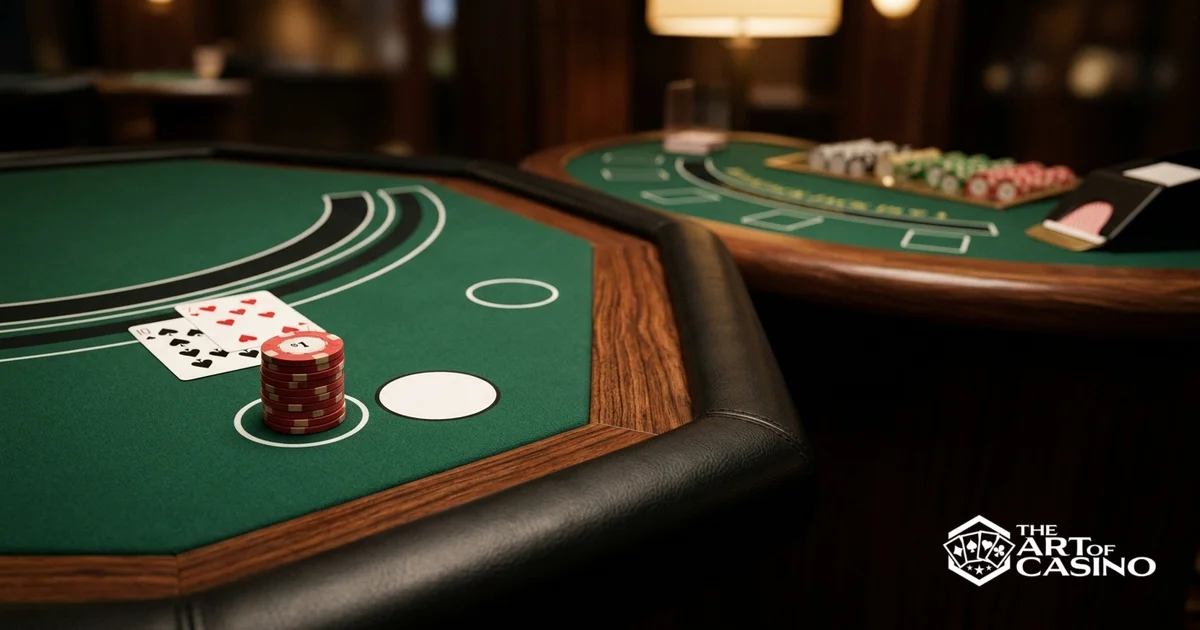
Look for empty betting circles on the felt. Each circle represents one seat. Walk up and ask "Is this seat open?" even if it looks empty, sometimes players are taking a bathroom break.
At Roulette
Players stand around the table; there usually aren't assigned seats. Find a spot at the rail where you can comfortably reach the betting layout.
At Craps
Craps tables have room for many players standing around the rail. Find an open spot, set your cash on the layout, and wait for the dealer to acknowledge you.
Buying Chips
This is where many beginners feel uncertain. Here's exactly how it works:
Step 1: Wait for a Break
Don't interrupt a hand in progress. Wait until the current round finishes, when the dealer is paying winners or collecting losing bets.
Step 2: Place Cash on the Table
Never hand cash directly to the dealer. This is a strict rule for security reasons. Instead:
- Place your bills flat on the felt, outside any betting area
- Say clearly: "Change, please" or "Changing [amount]"
- Wait for the dealer to acknowledge you
Step 3: Receive Your Chips
The dealer will:
- Count your cash visibly
- Announce the amount to the pit boss
- Slide your chips to you
How Much to Buy In
A reasonable buy-in is 20-40 times the table minimum:
| Table Minimum | Suggested Buy-In |
|---|---|
| $5 | $100-200 |
| $10 | $200-400 |
| $15 | $300-600 |
| $25 | $500-1,000 |
You can always buy more chips later. You can also buy in for less, there's no required amount.
Chip Colors
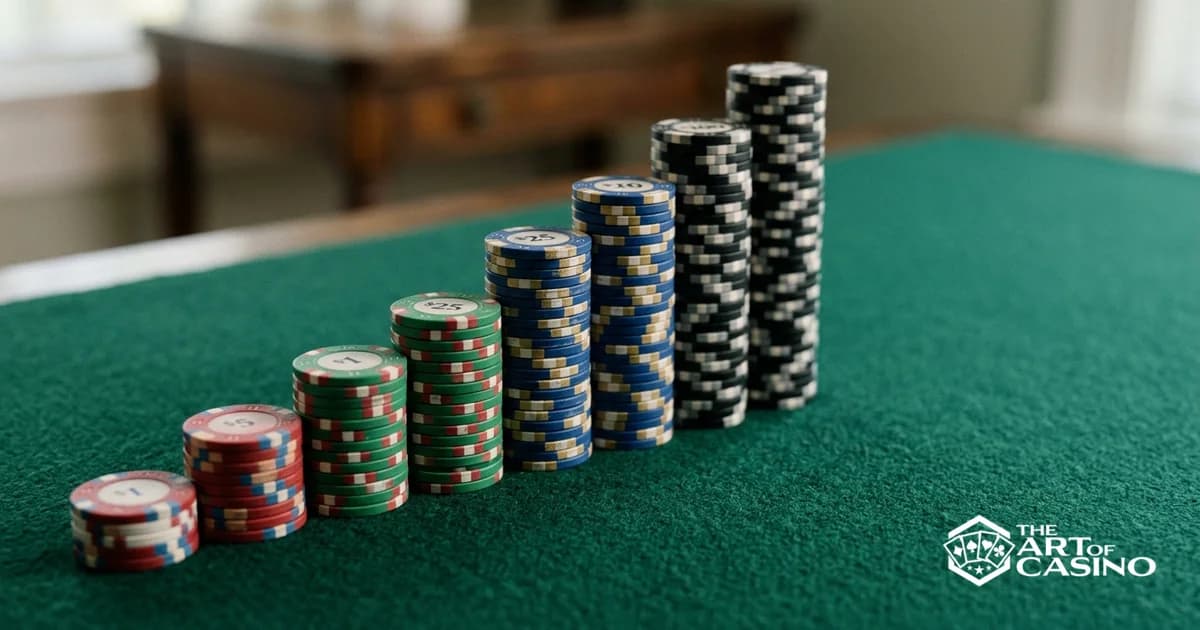
Standard chip values:
- White: $1
- Red: $5
- Green: $25
- Black: $100
- Purple: $500
Colors vary by casino, but these are most common.
Placing Your First Bet
At Blackjack
- Place your chips in the betting circle in front of your seat
- Stack chips neatly with highest value on bottom
- Do this before the dealer announces "No more bets" or waves their hand over the layout
- Keep your hands away from the bet once cards are dealt
At Roulette
- Place chips on the number(s) or betting areas you want
- You can bet until the dealer announces "No more bets"
- Different bets have different payouts, ask the dealer if unsure
At Craps
- For a basic Pass Line bet, place chips on the area marked "Pass Line"
- Some bets require the dealer to place them for you, just put your chips on the table and tell them what you want
- Listen for when it's okay to bet, some bets can only be made at certain times
Hand Signals: Communicating with the Dealer
Casinos require hand signals for decisions so that security cameras can verify every play. Using signals also prevents misunderstandings.
Blackjack Hand Signals
For face-up games (most common):
- Hit: Tap the table behind your cards or scratch toward yourself
- Stand: Wave your hand horizontally over your cards
- Double down: Place an equal bet next to your original bet and hold up one finger
- Split: Place an equal bet next to your original and hold up two fingers
For face-down games:
- Hit: Scratch your cards toward yourself on the felt
- Stand: Slide your cards under your chips
Roulette Signals
Verbal communication is fine at roulette, but point clearly to where you want chips placed if the table is crowded.
Craps Signals
Craps uses verbal calls with the dealer placing many bets for you. Speak clearly and wait to be acknowledged.
Table Game Etiquette
Do's
- Be patient: The dealer will get to you
- Keep your cards on the table: Never remove cards from the table surface
- Stack chips neatly: Higher denominations on bottom
- Tip occasionally: Not required, but appreciated for good service
- Ask questions: Politely ask the dealer for help during slow moments
- Use your player's card: Hand it to the dealer when you sit down
Don'ts
- Don't touch your bet: Once cards are dealt or the ball is spinning, hands off
- Don't touch other players' chips: Even to help organize
- Don't criticize other players: Their decisions are their business
- Don't hold up the game: Make decisions in reasonable time
- Don't use phones at the table: Most casinos prohibit this during play
- Don't buy in during a hand: Wait for a break in the action
Dealing with Mistakes
Mistakes happen. Here's how to handle them:
If You Make the Wrong Signal
Say "I'm sorry, I meant to [correct action]." If the dealer hasn't acted yet, they'll usually allow a correction. If cards have already been dealt, the pit boss may need to make a ruling.
If You're Confused
Say "I'm new to this, what should I do?" Dealers help beginners constantly. They'd rather you ask than hold up the game.
If There's a Dispute
Stay calm. The pit boss will review the situation. Security cameras record everything, so honest mistakes get sorted out fairly.
Game-Specific Tips for Beginners
Blackjack
- Learn basic strategy, it tells you the optimal play for every situation
- Start at lower-limit tables where mistakes cost less
- Don't take insurance (the side bet when dealer shows an ace)
- A strategy card is allowed at most tables, buy one in the gift shop
Roulette
- Start with outside bets (red/black, odd/even) for nearly 50-50 odds
- Avoid the five-number bet (0, 00, 1, 2, 3), it has the worst odds
- European roulette (one zero) has better odds than American (two zeros)
Craps
- Start with Pass Line bets, simple and good odds
- Take odds behind your Pass Line bet when you can
- Avoid proposition bets in the center of the table, high house edge
- It's okay to make only Pass Line bets your whole session
Baccarat
- Bet on Banker, it has the lowest house edge
- Avoid the Tie bet, terrible odds
- No strategy required, cards are dealt according to fixed rules
Leaving the Table
Cashing Out
When you're ready to leave:
- Wait for a hand to finish
- Tell the dealer "Color me up" or "Cash me out"
- They'll exchange your smaller chips for larger denominations
- Take your chips to the cashier cage to convert to cash
Tipping
Tipping dealers is customary but not required. If you had a good experience:
- Give a direct tip: "This is for you" and slide chips toward them
- Place a bet for the dealer: Put a chip in front of your bet and say "For the dealer"
Standard tip is $5-10 per session, more if you won significantly.
The Bottom Line
Joining a table game is easier than it looks. Wait for a break, buy in properly, use hand signals, and don't be afraid to ask questions. Every experienced player was once in your exact position.
Start at lower-limit tables where mistakes cost less, focus on learning the rhythm of the game, and remember: dealers want you to have a good time. They're there to help.