
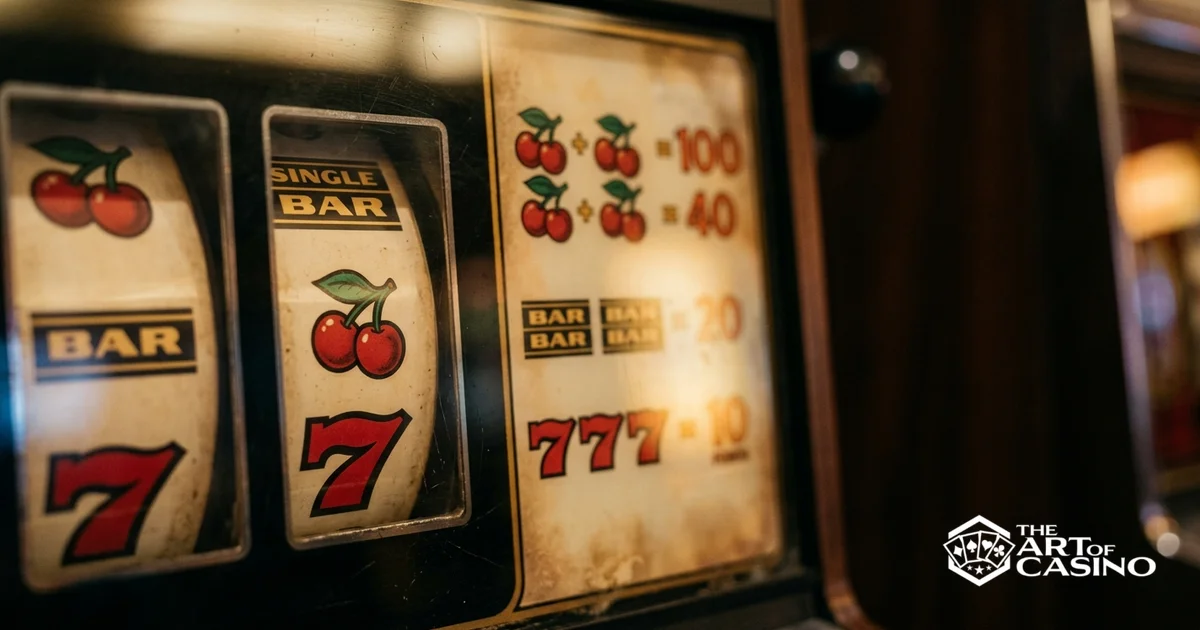
That screen full of symbols, numbers, and features isn't just decoration, it's the blueprint for the entire game. Learning to read slot machine pay tables helps you choose better games and understand exactly what you're playing.
Why Pay Tables Matter
They reveal the game's math:
- What symbols pay what amounts
- How bonus features trigger
- Special rules and multipliers
- RTP percentage (sometimes)
Two identical-looking slots can have completely different pay tables. The flashy theme doesn't tell you anything about value. The pay table does.
Accessing the Pay Table
Physical Slot Machines
- Look for a "Pay Table" or "Info" button
- May be labeled with "?" or "i"
- Some machines display it on screen permanently
- Older machines have it printed on the glass
Online Slots
- Usually a menu icon (hamburger lines or gear)
- "i" button or "Paytable" tab
- Some show it before the game loads
- Available during play
Understanding Symbol Values
Reading Symbol Payouts
Pay tables show what each symbol combination pays. This is typically displayed as:
- Credits/coins for specific combinations
- Multiplier of your bet
- Fixed amounts at certain bet levels
Example pay table entry:
| Symbol | 3 of a Kind | 4 of a Kind | 5 of a Kind |
|---|---|---|---|
| Wild | 50x | 500x | 5,000x |
| Crown | 25x | 100x | 1,000x |
| Diamond | 15x | 50x | 500x |
| Heart | 10x | 25x | 200x |
| Spade | 5x | 15x | 100x |
| Club | 5x | 15x | 100x |
| A | 2x | 5x | 25x |
| K, Q, J | 1x | 2x | 10x |
What "x" Means
When you see "50x," that means 50 times your bet-per-line or total bet, depending on the game. Always check which:
- Per-line bet: A $1 bet per line with 50x = $50
- Total bet: A $1 total bet with 50x = $50
Scatter vs. Regular Symbols
Regular symbols: Must appear on a payline (we'll cover these next) in sequence, usually left-to-right.
Scatter symbols: Pay anywhere on the screen, regardless of paylines. Often trigger bonus features.
Example: "3 or more Scatter symbols anywhere trigger Free Spins"
Wild Symbols
Wilds substitute for other symbols to complete winning combinations. Pay tables specify:
- Which symbols wilds can replace (usually all except scatters)
- Any multipliers wilds apply
- Special wild behaviors (expanding, sticky, stacked)
Understanding Paylines
What Are Paylines?
Paylines are the patterns across the reels where matching symbols must land to create wins.
Classic 3-reel slot: Usually 1-5 paylines Modern video slot: Anywhere from 10 to 100+ paylines Megaways slots: Up to 117,649 ways to win
Types of Paylines
Fixed paylines: You must play all lines every spin. The pay table shows total bet options.
Adjustable paylines: You choose how many lines to activate. Playing fewer lines reduces cost but also reduces winning opportunities.
Ways to win: Instead of specific line patterns, wins occur when matching symbols land on consecutive reels starting from the leftmost reel, regardless of position. A "243 ways" slot means 3×3×3×3×3 combinations (5 reels, 3 symbol positions each).
Reading Payline Diagrams
Pay tables show visual diagrams of each payline path. Example patterns:
Line 1: ─ ─ ─ ─ ─  (straight across middle)
Line 2: ╱ ─ ─ ─ ╲  (V-shape)
Line 3: ╲ ─ ─ ─ ╱  (inverted V)
Line 4: ─ ╱ ╲ ╱ ─  (zigzag)
Wins only count when symbols align exactly on these paths.
Bonus Features Explained
Modern slots are loaded with bonus features. The pay table explains how each works.
Free Spins
Common triggers:
- 3+ scatter symbols
- Specific symbol combinations
- Random trigger
What to look for:
- How many free spins you get
- Multipliers during free spins
- Retriggering (can you get more free spins during free spins?)
- Special wilds or features during the round
Pick Bonuses
Select objects to reveal prizes. The pay table typically shows:
- How to trigger (usually bonus symbols on specific reels)
- Number of picks available
- Prize ranges
Multipliers
Types of multipliers:
- Base game multipliers (wilds, random events)
- Free spin multipliers (often increase with each spin)
- Win multipliers (applied after a win)
Stacking: Can multipliers combine? A 2x wild on a 3x free spin multiplier might mean 6x, or just 3x. The pay table specifies.
Cascading/Tumbling Reels
Winning symbols disappear, new ones fall in. Key details:
- Do multipliers increase with consecutive wins?
- Can this trigger during free spins?
- Any limits?
Progressive Jackpots
Types:
- Standalone (single machine)
- Local (linked within casino)
- Wide-area (linked across casinos)
Pay table info:
- Jackpot trigger conditions
- Bet requirements (often requires max bet)
- Multiple jackpot tiers
Finding Return to Player (RTP)
What Is RTP?
RTP (Return to Player) is the percentage of wagered money a slot returns over time.
- 95% RTP: For every $100 wagered, $95 returns to players on average
- House edge: 100% - RTP (so 95% RTP = 5% house edge)
Where to Find RTP
Online slots: Usually in the pay table or rules section. UK-licensed sites are required to make RTP available to players, usually in the game rules or pay table.
Physical casino slots: Harder to find. Some display it; many don't. You may need to:
- Ask slot attendants
- Check manufacturer specifications online
- Look for posted floor returns (average for machine type)
RTP Ranges
| Category | RTP Range |
|---|---|
| Excellent | 97-99% |
| Good | 95-97% |
| Average | 93-95% |
| Below average | 90-93% |
| Poor | Below 90% |
Volatility vs. RTP
RTP doesn't tell you everything. Two slots with 96% RTP can play very differently:
Low volatility:
- Frequent small wins
- Rarely goes long without hitting
- Bonus features trigger often but pay less
High volatility:
- Infrequent wins
- Can go many spins without paying
- Bonus features rare but potentially huge
Some pay tables describe volatility; others leave you to figure it out from the pay structure.
Red Flags in Pay Tables
Misleading "Up To" Language
"Win up to 50,000x!" sounds amazing until you realize that requires:
- Max multipliers on max bet
- Perfect wild alignment
- Progressive jackpot hit
- During a super-rare bonus
The realistic top win is usually much lower.
Tiny Base Game Pays
If regular symbols pay very little and most value is locked in rare bonuses, the game has high volatility. Fine if you know this going in; frustrating if you don't.
Unclear Bet Requirements
Some progressives require max bet for jackpot eligibility. If you're betting less, you might be playing a game with reduced RTP without the big jackpot opportunity.
Complex Rules
The more rules and exceptions, the harder it is to know what's happening. Simpler pay tables are often more player-friendly.
Comparing Slot Machines
What to Look For
Higher RTPs: All else equal, 96% RTP is better than 92%.
Reasonable volatility for your bankroll: High volatility needs bigger bankroll to weather losing streaks.
Understandable features: If you can't explain how the bonus works, the game might be designed to confuse.
Achievable bonus triggers: Bonuses triggered every 50-100 spins are more realistic than every 500.
Making the Comparison
Choose two or three slots that look interesting. Check their pay tables for:
- RTP (if available)
- Regular symbol payouts
- Bonus trigger requirements
- Top win potential
Then decide which offers better value for your play style.
The Math Behind Slot Machines
Every Spin Is Random
Modern slots use RNGs (Random Number Generators). Each spin is independent. The machine doesn't know:
- Your recent results
- How long since the last bonus
- Whether you're "due"
The Program Determines Returns
A slot's returns are determined by its programming:
- Symbol weights (how often each symbol appears)
- Bonus trigger probabilities
- Pay table values
The machine is designed to return its stated RTP over millions of spins. Individual sessions can vary wildly.
You Can't Beat the Math
No amount of pay table knowledge changes the house edge. What it does:
- Helps you find better-paying games
- Sets realistic expectations
- Lets you understand what you're playing
The Bottom Line
Slot machine pay tables are your window into the game's mechanics. Take 30 seconds to check:
- What the symbols pay
- How bonuses trigger
- What the RTP is (if shown)
This won't guarantee wins, nothing does, but it ensures you know what you're playing. An informed player is a smarter player, even if the math doesn't change.