

How to Play Casino War: Rules, Odds & Strategy Guide
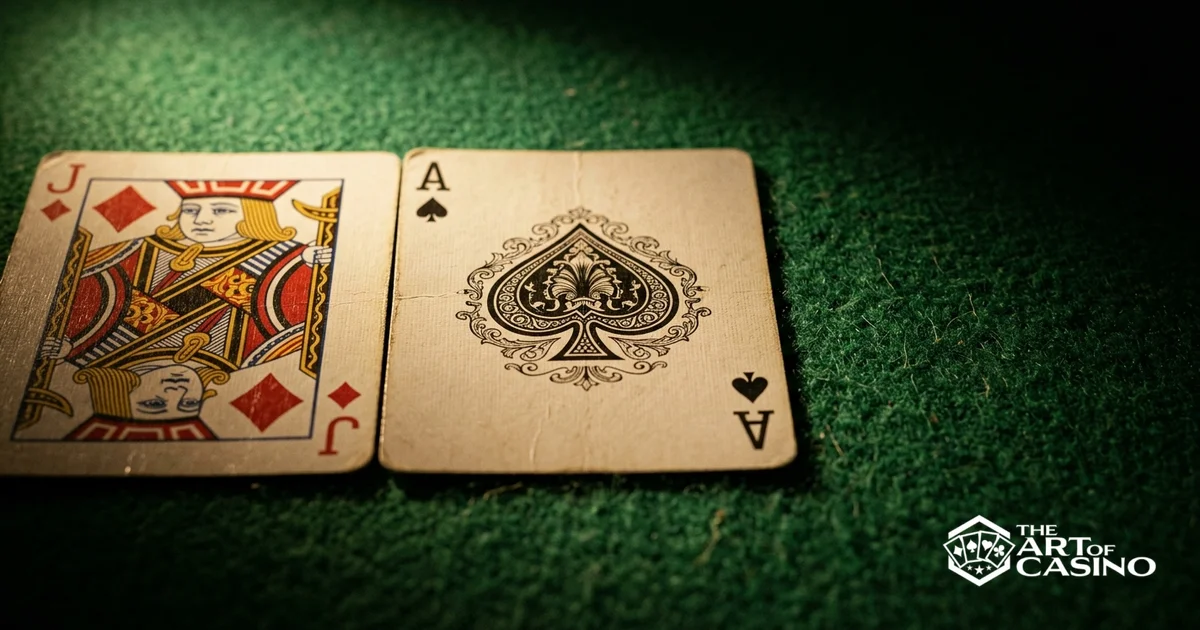
Casino War is the simplest card game in the casino. It is literally the childhood card game War adapted for gambling, you and the dealer each get one card, and the higher card wins. No decisions, no strategy, no skill. Just flip and hope.
This guide covers everything about Casino War: how it works, what the odds really are, and whether you should ever play it.
Table of Contents
- What Is Casino War?
- How to Play
- Card Rankings
- The Tie Situation
- Payouts
- Odds and House Edge
- Strategy
- Side Bets
- Frequently Asked Questions
- Conclusion
What Is Casino War?
Casino War is a casino table game based on the classic children's card game War. Each player competes against the dealer in a simple high-card contest. The entire game consists of comparing two cards, yours and the dealer's.
Origins
Casino War was introduced to casinos in the 1990s as a way to attract casual players who might find traditional table games intimidating. Its extreme simplicity makes it accessible to anyone, regardless of gambling experience.
Why Casino War Exists
Zero learning curve: If you can compare two cards, you can play Casino War.
Nostalgia factor: Most adults remember playing War as children.
Low intimidation: No complex rules, no strategy decisions, no dealer judgment calls.
Quick play: Each hand takes seconds.
Casino War is designed for players who want the casino experience without any mental effort. That simplicity comes at a cost, the house edge.
How to Play
Casino War gameplay could not be simpler.
Step-by-Step
-
Place your bet: Put chips in the betting circle.
-
Receive your card: The dealer gives you one card face up.
-
Dealer receives a card: The dealer takes one card face up.
-
Compare cards: Higher card wins.
-
Results:
- If your card is higher, you win even money (1:1)
- If the dealer's card is higher, you lose
- If cards tie, you have options (see tie section)
That is the entire game. No hitting, standing, splitting, or doubling. Just two cards, one winner.
Number of Decks
Casinos typically use six decks shuffled together, though some use fewer. The number of decks slightly affects the house edge but not the gameplay.
Card Rankings
Casino War uses standard card rankings by rank only, suits do not matter.
From highest to lowest:
| Rank | Value |
|---|---|
| Ace | Highest |
| King | Second highest |
| Queen | Third highest |
| Jack | Fourth highest |
| 10 | |
| 9 | |
| 8 | |
| 7 | |
| 6 | |
| 5 | |
| 4 | |
| 3 | |
| 2 | Lowest |
Key points:
- Aces are always high (unlike some card games where they can be low)
- Suits have no bearing on hand strength
- Two cards of the same rank tie
The Tie Situation
When you and the dealer have the same rank, things get interesting. You have two options:
Option 1: Surrender
Forfeit half your original bet and end the hand. You lose half, keep half.
Example: You bet $20, both cards are 7s. You surrender and lose $10.
Option 2: Go to War
Match your original bet with an additional equal wager. The dealer "burns" three cards and deals fresh cards to you and the dealer.
If you win the war: Your original bet pays even money. Your war bet pushes (is returned).
If you lose the war: You lose both bets.
If you tie again: At most casinos, you win even money on both bets. Some casinos require another war.
Which Option Is Better?
Going to war is mathematically superior to surrendering. The house edge on going to war is about 2.88%, while surrendering has an effective house edge of 3.70% on tie situations.
Always go to war. Never surrender.
Payouts
Casino War has simple, straightforward payouts.
Main Game Payouts
| Outcome | Payout |
|---|---|
| You win (higher card) | 1:1 |
| You lose (lower card) | Lose bet |
| Tie - Surrender | Lose half bet |
| Tie - Go to War - Win | 1:1 on original bet only |
| Tie - Go to War - Lose | Lose both bets |
| Tie - Go to War - Tie again | 1:1 on both bets (usually) |
Why War Wins Pay Only on Original Bet
When you go to war and win, your war bet pushes, it is returned without winnings. This is how the casino maintains its edge on the war scenario. You risk 2x to win only 1x.
Odds and House Edge
Casino War has a relatively high house edge for a table game.
House Edge
Going to war on ties: 2.88% (with six decks)
Surrendering on ties: 3.70%
Overall house edge: 2.88% if you always go to war
Probability Breakdown
| Outcome | Probability |
|---|---|
| You win (higher card) | 46.3% |
| Dealer wins (higher card) | 46.3% |
| Tie | 7.4% |
Why the House Has an Edge
The house edge comes from two sources:
-
Tie situations: When you go to war and win, you only win your original bet (the war bet pushes). When you lose, you lose both bets. This asymmetry favors the house.
-
Surrender option: If you surrender, you forfeit half your bet, a worse outcome than going to war.
Comparison to Other Games
| Game | House Edge |
|---|---|
| Casino War | 2.88% |
| Baccarat (Banker) | 1.06% |
| Blackjack (Basic Strategy) | 0.5% |
| Craps (Pass Line) | 1.41% |
| Roulette (Single Zero) | 2.70% |
| Roulette (Double Zero) | 5.26% |
Casino War is not the worst casino game, but it is significantly worse than optimal plays at other table games.
Strategy
There is almost no strategy in Casino War, but there is one crucial rule.
The Only Strategy That Matters
Always go to war. Never surrender.
Going to war reduces the house edge compared to surrendering. That is the entire strategy.
What Doesn't Work
Card counting: Theoretically possible but practically useless. The advantage gained is minuscule (fractions of a percent), and casinos shuffle frequently with multiple decks.
Betting systems: Martingale, Fibonacci, or any progression system does not overcome the house edge. They only change the distribution of wins and losses.
Pattern tracking: Each hand is independent. Previous results do not predict future cards.
Surrender timing: Some players surrender when they "feel" unlucky. This increases the house edge. Never surrender.
Honest Assessment
Casino War offers no meaningful strategic decisions. The game is pure luck. Your only choice is managing your bankroll and deciding whether to play at all.
Side Bets
Some casinos offer a tie side bet in Casino War.
The Tie Bet
Bet that your card and the dealer's card will tie. Pays 10:1 typically.
Tie Bet Math
| Decks | Tie Probability | Fair Odds | Typical Payout | House Edge |
|---|---|---|---|---|
| 6 | 7.41% | 12.5:1 | 10:1 | 18.65% |
The tie bet has a massive house edge. Never make this bet.
Why the Tie Bet Exists
Like most side bets, the tie bet exists to increase casino revenue from players attracted to long-shot payouts. The 10:1 payout sounds exciting, but the true odds are worse.
Frequently Asked Questions
Conclusion
Casino War is exactly what it appears to be: the childhood card game adapted for gambling. Flip a card, compare to the dealer, higher card wins. No strategy, no skill, no decisions beyond whether to play.
Key facts:
- House edge: 2.88% (always go to war on ties)
- No meaningful strategy exists
- The tie side bet is terrible (18%+ house edge)
- Never surrender, always go to war
Who should play Casino War:
- Players wanting absolute simplicity
- Complete beginners testing the casino waters
- Anyone seeking nostalgia over optimization
- Players who enjoy pure luck games
Who should skip Casino War:
- Value-focused gamblers
- Anyone willing to learn basic blackjack
- Players with limited bankrolls
- Those seeking any strategic engagement
Casino War is entertainment, not investment. If you find joy in the simple flip of a card and don't mind the house edge, an occasional hand is harmless. Just understand that almost every other table game offers better value for your gambling dollar.
Good luck at the tables.
Other Table Games Games
Explore the players and pioneers who shaped casino gaming in our Hall of Fame.