

How to Play Roulette: Rules, Bets, Odds, and Winning Strategies
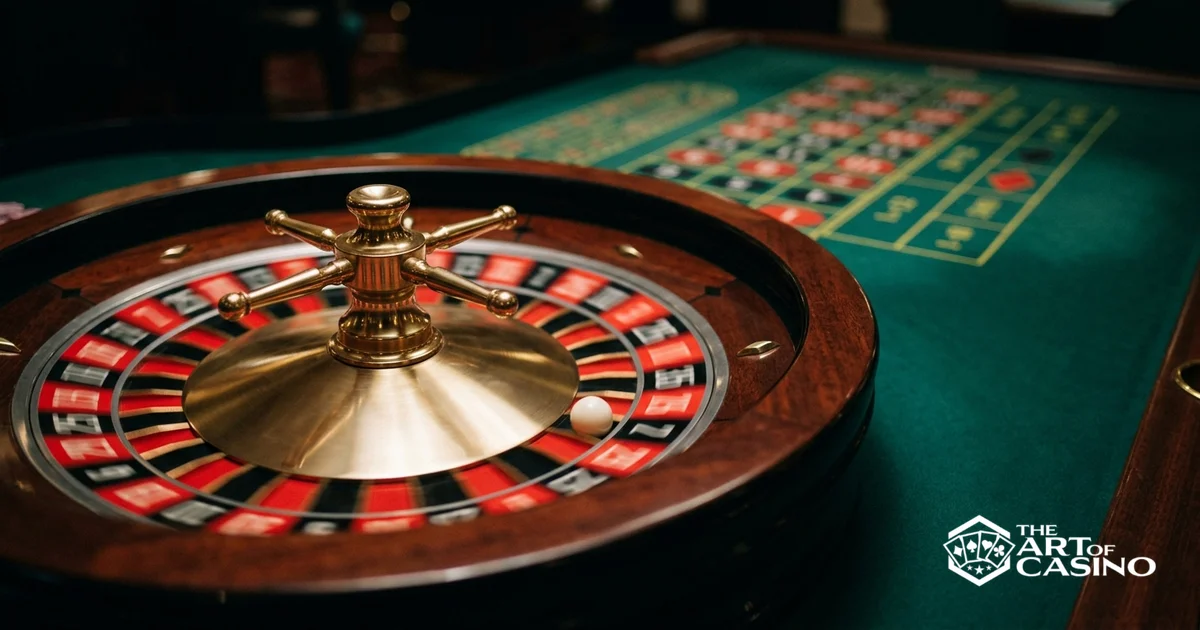
Roulette is the iconic casino game, a spinning wheel that has captivated gamblers for over two centuries. The elegant simplicity of watching a small ball determine your fate has made roulette a symbol of casino gambling itself. Whether you are drawn to the mathematics of the betting layout or simply enjoy the social atmosphere around the wheel, this guide covers everything you need to know about roulette.
This is not a surface-level overview. This is a complete resource covering every bet, every variation, and every strategic consideration for playing roulette in real casinos.
Table of Contents
- What Is Roulette?
- Quick Start Guide
- The Roulette Wheel and Table
- All Roulette Bets Explained
- Odds and Payouts
- American vs European vs French Roulette
- Roulette Strategy
- Betting Systems
- Table Etiquette
- Common Mistakes
- Frequently Asked Questions
- Conclusion
What Is Roulette?
Roulette is a casino game where players bet on where a ball will land on a spinning wheel divided into numbered pockets. The wheel contains numbers 1 through 36, alternating between red and black, plus one or two green zero pockets depending on the version.
The name comes from the French word for "little wheel," and the game originated in 18th-century France. Despite its age, roulette remains one of the most popular casino games worldwide, found in virtually every casino from Las Vegas to Monte Carlo to Macau.
Why Roulette Endures
Roulette offers something rare in casino gaming: complete transparency. You can see exactly where the ball lands, and the payouts are straightforward. There are no hidden rules, no complex strategies to master, and no dealer decisions that might seem arbitrary.
The game also accommodates every type of player. High rollers can bet thousands on a single number, while casual players can make minimum bets on even-money propositions. The pace is relaxed compared to blackjack or craps, giving players time to think, socialize, and enjoy the atmosphere.
The House Edge Reality
Unlike blackjack, roulette offers no opportunity to overcome the house edge through skill. Every bet on the table carries a fixed mathematical disadvantage that cannot be reduced through strategy.
On an American wheel (with 0 and 00), the house edge is 5.26% on almost every bet. On a European wheel (with only 0), the house edge drops to 2.70%. French roulette with the "la partage" rule reduces it further to 1.35% on even-money bets.
Understanding this reality is essential. You play roulette for entertainment, not as an investment strategy. The goal is to enjoy the game while managing your bankroll sensibly.
Quick Start Guide
If you want to play roulette within the next few minutes, here is everything you need to know.
The Goal
Predict where the ball will land on the wheel. You can bet on specific numbers, groups of numbers, colors, or other characteristics.
Basic Bets for Beginners
Start with these simple bets:
- Red or Black: Bet on the ball landing on any red or black number. Pays 1:1 (even money).
- Odd or Even: Bet on the ball landing on any odd or even number. Pays 1:1.
- 1-18 or 19-36: Bet on the ball landing in the lower or upper half of numbers. Pays 1:1.
These bets have roughly a 47% chance of winning (slightly less due to the zero pockets).
How to Play
- Exchange cash for special roulette chips at the table
- Place your chips on the betting area before the dealer says "no more bets"
- Watch the wheel spin and the ball land
- Winning bets are paid, losing bets are collected
- Repeat
What You Need
- Cash to buy chips (table minimums typically $5 to $25)
- Understanding of basic bets (above)
- Patience and a set budget
That is enough to start playing. Read on for complete details on every bet type and advanced considerations.
The Roulette Wheel and Table
Understanding the physical layout of roulette equipment helps you place bets quickly and correctly.
The Wheel
A roulette wheel contains numbered pockets arranged in a seemingly random pattern. However, the arrangement is carefully designed to achieve balance.
American Wheel (38 pockets): Numbers 1-36 plus 0 and 00 (double zero). The sequence around the wheel is: 0, 28, 9, 26, 30, 11, 7, 20, 32, 17, 5, 22, 34, 15, 3, 24, 36, 13, 1, 00, 27, 10, 25, 29, 12, 8, 19, 31, 18, 6, 21, 33, 16, 4, 23, 35, 14, 2.
European Wheel (37 pockets): Numbers 1-36 plus only 0 (single zero). The sequence is: 0, 32, 15, 19, 4, 21, 2, 25, 17, 34, 6, 27, 13, 36, 11, 30, 8, 23, 10, 5, 24, 16, 33, 1, 20, 14, 31, 9, 22, 18, 29, 7, 28, 12, 35, 3, 26.
In both versions, red and black alternate around the wheel, and odd and even numbers are distributed to prevent long sequences of either.
The Table Layout
The betting table is where you place your chips. It consists of:
The Number Grid: Numbers 1-36 arranged in three columns of 12 rows. Zero (and double zero on American tables) sits at the top.
Inside Betting Area: The grid of individual numbers where you can bet on single numbers or small groups.
Outside Betting Area: Larger sections for bets covering bigger groups: columns, dozens, red/black, odd/even, high/low.
Chip Colors
Unlike other casino games, roulette uses special colored chips unique to each player. When you buy in, the dealer assigns you a color. This prevents confusion about whose bet is whose when multiple players crowd the layout.
When you leave the table, exchange your colored chips for standard casino chips. Roulette chips have no value away from the specific table where they were issued.
All Roulette Bets Explained
Roulette offers more betting options than almost any other casino game. Every bet falls into one of two categories: inside bets (on specific numbers) and outside bets (on larger groups).
Inside Bets
Inside bets cover one to six numbers and offer higher payouts but lower odds of winning.
Straight Up (Single Number) Place your chip entirely within one number's square. Pays 35:1. You can bet on 0, 00 (American), or any number 1-36.
Split (Two Numbers) Place your chip on the line between two adjacent numbers. Pays 17:1. Example: betting on the line between 17 and 20.
Street (Three Numbers) Place your chip on the outside edge of a row of three numbers. Pays 11:1. Example: betting on the line at the edge of 7, 8, 9.
Corner (Four Numbers) Place your chip at the intersection of four numbers. Pays 8:1. Example: the corner where 25, 26, 28, and 29 meet.
Five Number Bet (American Only) Place your chip at the corner of 0, 00, and 1. Covers 0, 00, 1, 2, 3. Pays 6:1. This is the worst bet in roulette with a 7.89% house edge. Avoid it.
Six Line (Six Numbers) Place your chip on the intersection of two adjacent rows. Pays 5:1. Example: the corner where 4, 5, 6 meets 7, 8, 9.
Outside Bets
Outside bets cover larger groups and offer lower payouts but higher odds of winning.
Column Bet Place your chip in one of the three boxes at the bottom of each column (marked "2 to 1"). Covers all 12 numbers in that column. Pays 2:1.
Dozen Bet Place your chip on "1st 12," "2nd 12," or "3rd 12." Covers numbers 1-12, 13-24, or 25-36 respectively. Pays 2:1.
Red or Black Place your chip on the red or black diamond. Covers all 18 numbers of that color. Pays 1:1.
Odd or Even Place your chip on "Odd" or "Even." Covers all 18 odd or even numbers. Pays 1:1.
High or Low Place your chip on "1-18" or "19-36." Covers the lower or upper half of numbers. Pays 1:1.
Special French Bets (Call Bets)
French roulette tables offer additional betting options called "announced bets" or "call bets." These cover specific sections of the wheel rather than the layout.
Voisins du Zéro (Neighbors of Zero) Covers 17 numbers surrounding zero on the wheel: 22, 18, 29, 7, 28, 12, 35, 3, 26, 0, 32, 15, 19, 4, 21, 2, 25. Requires 9 chips placed on specific splits and corners.
Tiers du Cylindre (Third of the Wheel) Covers 12 numbers opposite zero: 27, 13, 36, 11, 30, 8, 23, 10, 5, 24, 16, 33. Requires 6 chips on splits.
Orphelins (Orphans) Covers the 8 numbers not included in Voisins or Tiers: 1, 20, 14, 31, 9, 17, 34, 6. Requires 5 chips.
Jeu Zéro (Zero Game) Covers the 7 numbers closest to zero: 12, 35, 3, 26, 0, 32, 15. Requires 4 chips.
Neighbors Bet Bet on any number plus the two numbers on each side of it on the wheel. Five numbers total, 5 chips required.
Call bets are not available at all casinos. When offered, you verbally announce your bet and the dealer places the chips for you.
Odds and Payouts
Every roulette bet has a fixed payout and a fixed probability of winning. Understanding these numbers helps you make informed decisions.
American Roulette Odds (38 numbers)
| Bet Type | Numbers Covered | Payout | Probability | House Edge |
|---|---|---|---|---|
| Straight Up | 1 | 35:1 | 2.63% | 5.26% |
| Split | 2 | 17:1 | 5.26% | 5.26% |
| Street | 3 | 11:1 | 7.89% | 5.26% |
| Corner | 4 | 8:1 | 10.53% | 5.26% |
| Five Number | 5 | 6:1 | 13.16% | 7.89% |
| Six Line | 6 | 5:1 | 15.79% | 5.26% |
| Column | 12 | 2:1 | 31.58% | 5.26% |
| Dozen | 12 | 2:1 | 31.58% | 5.26% |
| Even Money | 18 | 1:1 | 47.37% | 5.26% |
European Roulette Odds (37 numbers)
| Bet Type | Numbers Covered | Payout | Probability | House Edge |
|---|---|---|---|---|
| Straight Up | 1 | 35:1 | 2.70% | 2.70% |
| Split | 2 | 17:1 | 5.41% | 2.70% |
| Street | 3 | 11:1 | 8.11% | 2.70% |
| Corner | 4 | 8:1 | 10.81% | 2.70% |
| Six Line | 6 | 5:1 | 16.22% | 2.70% |
| Column | 12 | 2:1 | 32.43% | 2.70% |
| Dozen | 12 | 2:1 | 32.43% | 2.70% |
| Even Money | 18 | 1:1 | 48.65% | 2.70% |
Why the House Always Wins
The mathematics are simple. On a European wheel with 37 pockets, betting on a single number should pay 36:1 for fair odds (36 losing numbers for every 1 winning number). Instead, it pays 35:1. That difference between fair odds and actual payout creates the house edge.
On American wheels, the same 35:1 payout applies but there are 37 losing numbers for every winner, making the discrepancy larger.
The Only "Good" Bet in Roulette
French roulette with "la partage" or "en prison" rules offers the lowest house edge. When you make an even-money bet and the ball lands on zero:
- La Partage: You lose only half your bet (the house takes half, returns half)
- En Prison: Your bet is "imprisoned" for the next spin; if you win, you get your original bet back
Both rules reduce the house edge on even-money bets from 2.70% to 1.35%, making French roulette the best version for players.
Roulette Variations
Not all roulette wheels are created equal. The version you play significantly affects your expected losses.
American Roulette
The standard in most US casinos features both 0 and 00 pockets, creating 38 total numbers. The house edge of 5.26% is nearly double that of European roulette.
American roulette became common because casino operators wanted higher profits. The extra zero pocket has no strategic justification from the player's perspective.
Recommendation: Avoid American roulette when European or French versions are available.
European Roulette
The standard in most non-US casinos features only a single 0 pocket, creating 37 total numbers. The house edge of 2.70% is reasonable by casino game standards.
European roulette is widely available in Vegas and online. Look for it specifically when choosing a table.
Recommendation: Play European over American whenever possible.
French Roulette
Uses the same single-zero wheel as European roulette but adds player-favorable rules on even-money bets. The "la partage" or "en prison" rule cuts the house edge to 1.35% on red/black, odd/even, and high/low bets.
French roulette also features a different table layout with French terminology and call bets. However, the mechanics are identical to European roulette.
Recommendation: French roulette offers the best odds. Play it when available.
Mini Roulette
Some casinos offer a smaller wheel with only 13 numbers (1-12 plus 0). Payouts are reduced proportionally, but the house edge is typically higher than standard roulette. This is a novelty game.
Recommendation: Avoid. The house edge is usually worse than European roulette.
Multi-Wheel Roulette
Available mainly online, you bet once and the same bet applies to multiple wheels spinning simultaneously. This multiplies both your potential wins and losses but does not change the underlying house edge.
Recommendation: Acceptable if you want faster action, but bankroll management becomes more critical.
Rapid Roulette / Electronic Roulette
Stadium-style gaming with individual betting terminals connected to a single live wheel or an electronic wheel. The odds are identical to the corresponding wheel type (American or European).
Recommendation: Fine for privacy or avoiding crowded tables, but some players prefer the traditional experience.
Roulette Strategy
Let me be direct: no betting strategy can overcome the house edge in roulette. The ball has no memory, the wheel has no patterns, and every spin is independent.
However, strategy still matters in terms of bankroll management and maximizing enjoyment.
Choosing Your Bet Types
For Entertainment Value: Straight-up bets on single numbers offer the most excitement. Hitting a 35:1 payout is thrilling, even though it happens rarely. If you want drama, bet numbers.
For Longer Sessions: Even-money bets (red/black, odd/even, high/low) keep you in the game longer. You will win close to half your bets, creating a slower grind. If you want to socialize and enjoy the atmosphere, outside bets are ideal.
For Best Mathematical Odds: Play French roulette with la partage. Stick to even-money bets. Accept that you will still lose in the long run but at the lowest possible rate.
Bankroll Management
Set a budget before you play. Divide it by the number of spins you want to play, and that determines your bet size.
Example: $200 budget, wanting roughly 100 spins. Bet around $2 per spin on average.
When your budget is gone, stop playing. When you hit a significant win, consider setting aside part of it as guaranteed profit. The discipline to walk away matters more than any betting pattern.
What Does Not Work
Pattern Recognition: The wheel has no memory. Previous results do not influence future spins. That electronic board showing recent numbers is entertainment, not useful data.
Dealer Signatures: The theory that dealers develop consistent release patterns is largely myth. Modern wheels are designed to produce random results, and most dealers rotate positions frequently.
Wheel Bias: Historically, players found physical imperfections in wheels that made certain numbers land more often. Modern wheels are precision-engineered and regularly inspected. Exploitable bias essentially does not exist anymore.
Betting Systems: See the next section for why Martingale and similar systems do not work.
Betting Systems
Betting systems are structured approaches to wagering that claim to guarantee profits or minimize losses. None of them work mathematically, but understanding why helps you avoid expensive mistakes.
The Martingale System
How It Works: Double your bet after every loss. When you eventually win, you recover all losses plus one unit of profit. Reset to the original bet.
Why It Fails: Table limits prevent infinite doubling. A $10 minimum table with a $500 maximum allows only 6 doublings ($10, $20, $40, $80, $160, $320). Seven losses in a row (which happens more often than you think) wipes out your ability to continue the system.
Additionally, risking hundreds to win $10 is poor risk management. The math shows you win small amounts frequently but occasionally lose catastrophically, and the house edge applies to every bet regardless.
The Fibonacci System
How It Works: Bet according to the Fibonacci sequence (1, 1, 2, 3, 5, 8, 13...). After a loss, move one step forward. After a win, move two steps back.
Why It Fails: Same fundamental problem as Martingale. The progression is slower, but losing streaks still eventually exceed table limits or your bankroll. The house edge applies to every bet.
The D'Alembert System
How It Works: Increase your bet by one unit after a loss, decrease by one unit after a win.
Why It Fails: Less aggressive than Martingale but still cannot overcome the house edge. In the long run, you will lose approximately 2.70% (European) or 5.26% (American) of all money wagered, regardless of bet sizing patterns.
The Labouchère System
How It Works: Write a sequence of numbers. Bet the sum of the first and last. If you win, cross out those numbers. If you lose, add the amount lost to the end. Complete when all numbers are crossed out.
Why It Fails: Complex bookkeeping does not change mathematics. The system can produce winning sessions but also spectacular losing sessions when things go wrong.
Why Systems Feel Like They Work
Betting systems work in the short term due to variance. You might have a winning session with any system. But over thousands of spins, results converge toward the mathematical expectation, and every system loses at the rate of the house edge.
The gambler's fallacy makes systems feel logical. If red has hit five times in a row, black feels "due." But the wheel has no memory. The probability of red or black on the next spin is exactly the same regardless of history.
Table Etiquette
Roulette has its own customs and procedures. Following them helps the game run smoothly and keeps other players and the dealer happy.
Buying In
Wait for a pause between spins, then place cash on the table (not in the dealer's hand) and ask for chips. The dealer will ask what denomination you want each chip to represent. Common choices are $1, $5, or the table minimum.
You will receive chips of a unique color. These chips are only valid at this specific table.
Placing Bets
Place your chips on the layout clearly and deliberately. If you cannot reach a spot, ask the dealer to place the bet for you. Announce your bet clearly: "17 straight up" or "$5 on black."
You can place bets while the wheel is spinning, but stop immediately when the dealer waves their hand and says "no more bets." Late bets are not accepted.
During the Spin
Do not touch any chips on the layout once betting is closed. Keep your hands away from the table. Watch the wheel, enjoy the anticipation, and wait for the result.
After the Ball Lands
The dealer places a marker (dolly) on the winning number. Do not touch any chips until the dealer removes the dolly. They will clear losing bets first, then pay winners.
Collect your winnings after the dealer gestures that it is okay. Place your next bet for the upcoming spin.
Cashing Out
When you are ready to leave, wait for a break between spins. Push your colored chips toward the dealer and say "color out" or "cash out." The dealer will exchange your colored chips for standard casino chips that you can use elsewhere or cash at the cage.
Tipping
Tipping the dealer is customary but not required. Common methods: place a bet for the dealer on any number or outside bet, or give them a chip directly between spins. A dollar or two per winning bet is typical.
Common Mistakes
Avoiding these errors will not make you a winner, but it will prevent unnecessary additional losses.
Playing American When European Is Available
Every spin on an American wheel costs you nearly twice as much in expected value. If a European table is open at the same minimum, play there instead.
Betting the Five-Number Bet
The bet covering 0, 00, 1, 2, 3 on American roulette has a 7.89% house edge instead of the standard 5.26%. There is no mathematical reason to ever make this bet.
Chasing Losses
Increasing bets to recover losses is a recipe for larger losses. The house edge does not change based on your emotional state or previous results. Stick to your predetermined bet sizes.
Believing in Patterns
The electronic display showing recent numbers exists to encourage exactly this mistake. There are no patterns. Every spin is independent. Do not bet based on what numbers have or have not appeared recently.
Ignoring Bankroll Management
Playing without a budget, or playing until the money runs out, removes the enjoyment from gambling. Set limits, stick to them, and treat losses as the cost of entertainment.
Playing When Tired or Intoxicated
Impaired judgment leads to larger bets, ignored limits, and regrettable decisions. Roulette is meant to be fun. If you are not in a state to enjoy it responsibly, do something else.
Frequently Asked Questions
Conclusion
Roulette is pure casino entertainment. The spinning wheel, the bouncing ball, the communal excitement when players win together, these create an experience unlike any other casino game.
The mathematics are unforgiving but simple. Every bet carries a house edge that cannot be overcome. Accept this reality, set a budget, and play for the experience rather than the expectation of profit.
For the best odds: Play French roulette with la partage. Make even-money bets. The 1.35% house edge is among the lowest in the casino.
For maximum enjoyment: Find a European wheel with a comfortable minimum. Mix inside and outside bets based on your mood. Socialize with other players. Enjoy the ritual of the spinning wheel.
For responsible play: Set a budget before you start. Never chase losses. Walk away when you have had enough, win or lose. Gambling should add to your enjoyment, not create stress.
The wheel will spin whether you are playing or not. Your job is to enjoy the spins you choose to participate in.
See you at the wheel.
Roulette Strategy & Smart Play Guides
10 min read
12 min read
11 min read
Roulette Game Variations
5.26%
2.70%
1.35% on even-money bets
Other Table Games Games
Roulette Hall of Fame
Meet the players who shaped Roulette.