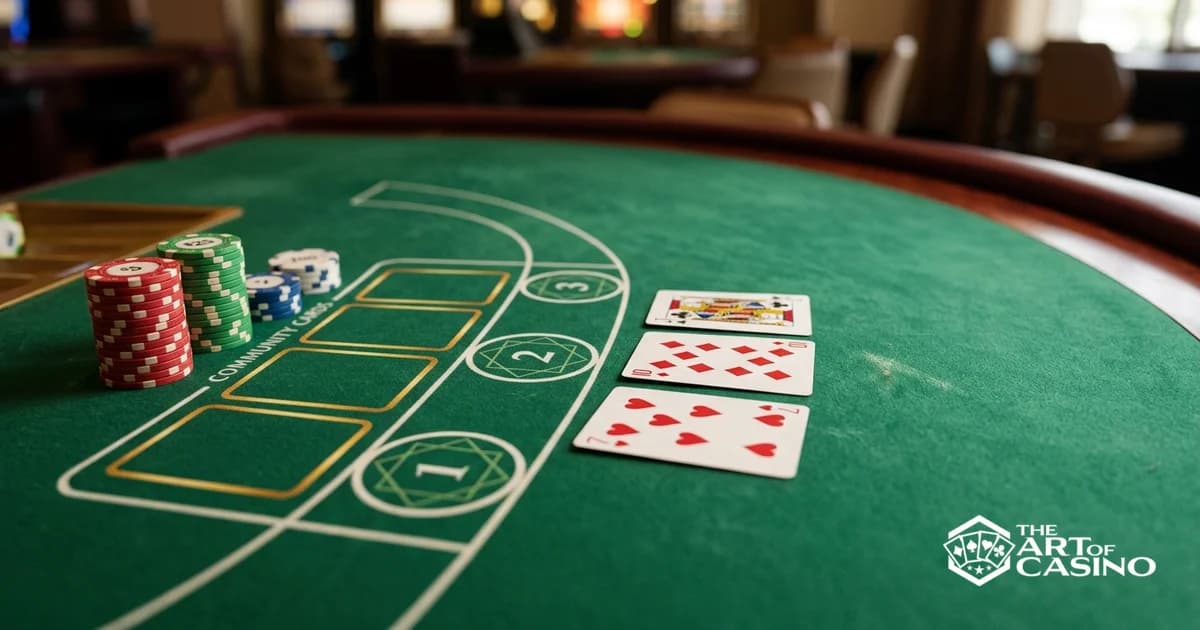

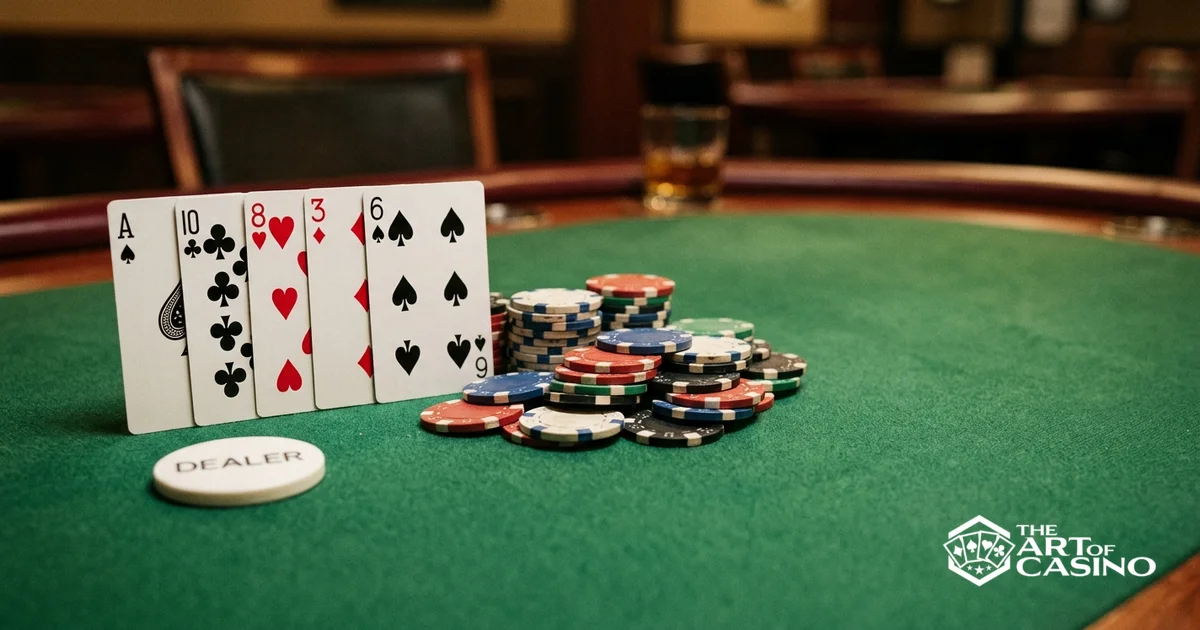
Poker dealing differs fundamentally from other table games. Players compete against each other, not the house. The dealer manages the game rather than representing an opponent.
This guide covers essential poker dealing procedures, focusing primarily on Texas Hold'em with notes on other variants.
Poker Room vs. Pit
Key Differences
Player vs. player: Unlike pit games, poker players compete against each other. The house takes a rake.
Dealer neutrality: No rooting interest in outcomes. Pure game administration.
Tip structure: Individual tips from pot winners rather than pooled tokes.
Pace: Players make decisions. Dealer manages but doesn't control speed.
Dealer Responsibilities
- Shuffle and deal cards fairly
- Manage betting rounds
- Calculate pots and side pots
- Enforce rules
- Call floor when needed
- Collect rake
Shuffle Procedures
Standard Shuffle
Wash: Spread cards face down, mix thoroughly with circular motions.
Riffle: Split deck, interleave cards. Minimum 3-4 riffles.
Strip: Pull cards from top in small groups, reassemble.
Box: Cut deck into quarters, reassemble in different order.
Cut: Player cuts deck with cut card.
Automatic Shufflers
Common in cardrooms: Machine shuffles while current hand plays.
Dealer role: Load cards, remove shuffled deck, maintain machine.
Fallback: Manual shuffle procedures when machine down.
Security
Card protection: Cards never leave dealer's sight during shuffle.
Cut card: Bottom card never visible.
Deck changes: New decks at set intervals or on request.
The Button and Blinds
Button Position
Meaning: Marks dealer position (though house dealer actually deals).
Movement: Moves clockwise after each hand.
Dead button: If player busts, button may stay in position one hand.
Posting Blinds
Small blind: Player immediately left of button. Usually half big blind.
Big blind: Player left of small blind. Sets minimum bet.
Procedure: Blinds posted before cards dealt.
Missed Blinds
Absent player: Misses blind(s) while away.
Return: Must post missed blinds or wait for big blind position.
Dead/live: Dead blind goes to pot; live blind counts as bet.
Dealing Texas Hold'em
Pre-Flop
Step 1: Collect blinds.
Step 2: Deal one card at a time, clockwise, starting left of button.
Step 3: Each player receives two cards face down.
Step 4: Betting round begins with player left of big blind.
Dealing Technique
Pitch: Cards dealt face down to each position.
Burn: One card burned before each community card round.
Position: Cards dealt low, sliding to players.
The Flop
Burn: One card face down to discard.
Flop: Three community cards face up.
Position: Center of table, clearly visible to all.
Betting: Begins with first active player left of button.
The Turn
Burn: One card.
Turn: One community card added to board.
Betting: Same as flop.
The River
Burn: One card.
River: Fifth and final community card.
Betting: Final betting round.
Showdown
Order: Last aggressor shows first. If checked, first position shows.
Optional show: Losing hands may muck without showing.
Reading hands: Dealer announces best hand. Awards pot.
Betting Procedures
Bet Sizes
Minimum raise: At least the size of the previous raise.
All-in: Player bets all remaining chips.
String bets: Not allowed, bet must be made in one motion or announced.
Managing Action
Track betting: Know who bet what, who still owes.
Verbal announcements: "Raise to $50" type announcements are binding.
Call the action: Keep players informed of action needed.
Collecting Bets
Per round: Collect bets after betting round closes.
Stack in pot: Move chips to pot area.
Side pots: Create when all-in situations occur.
Pot Management
Basic Pot Building
Accumulation: Build pot during betting rounds.
Visibility: Players should be able to estimate pot size.
Clarity: Keep pot organized, not scattered.
Side Pots
When: Created when a player is all-in with others still betting.
Calculation: All-in player only eligible for main pot.
Multiple side pots: Multiple all-ins create multiple side pots.
Side Pot Example
Scenario: Player A all-in $100, Players B and C continue betting to $200.
Main pot: $300 (A's $100 matched by B and C's $100 each) Side pot: $200 (B and C's additional $100 each)
A can only win main pot. B or C winner takes side pot.
Awarding Pots
Announcement: Announce winner and winning hand.
Push pot: Push chips to winner.
Rake: Take house rake before awarding.
Rake Collection
Methods
Pot rake: Percentage of pot up to a cap.
Time charge: Flat fee per half-hour or hour.
Per-hand fee: Fixed amount per hand dealt.
Pot Rake Procedure
Timing: Take rake after hand concludes, before awarding pot.
Calculation: Know your property's rake structure.
Drop box: Rake goes directly to drop.
Transparency
Visible: Take rake openly, not secretly.
Accuracy: Correct rake amount, no over-taking.
Other Poker Variants
Omaha
Hole cards: Four cards to each player (not two).
Board use: In Omaha, players must use exactly two of their four hole cards plus three community cards, unlike Hold'em, where any combination of hole and board cards may be used.
Dealing: Same as Hold'em, just four initial cards.
Seven Card Stud
No community cards: Each player receives own seven cards.
Dealing sequence: Each player starts with two cards down and one up (third street). Cards four through six are dealt face up one at a time with a betting round after each, and the seventh and final card is dealt face down.
Bring-in: Lowest exposed card brings in (forced bet).
Mixed Games
Rotation: Game type changes on schedule.
Button adjustment: Some require button/blind adjustments between games.
Knowledge: Must know all games in the mix.
Table Management
Seat Changes
Request: Players may request seat changes.
Priority: Usually first-come, first-served for open seats.
Table change: Moving to different table handled by floor.
Player Behavior
One player per hand: No advice-giving between players during hands.
English only: During hands, English only at most US cardrooms.
Phone use: Policies vary, usually no active use during hands.
Time Issues
Clock: When requested, player gets set time to act.
Time elapsed: Hand declared dead if time expires without action.
Floor: Call floor to run the clock.
Game Protection
Card Protection
Exposure: Cards dealt face down, protected by players.
Premature reveal: If cards exposed by dealer error, hand may continue or be dead per rules.
Burn cards: Never exposed.
Collusion
Watch for: Soft play between players, chip dumping, signaling.
Report: Suspicious activity reported to floor.
Cheating
Card marking: Watch for card manipulation.
Chip stealing: Monitor chip movements.
Dealer action: Report, don't accuse. Let floor/security handle.
Common Scenarios
All-In and Call
Procedure: When all remaining players are all-in, deal remaining cards, showdown all hands.
No more action: Turn cards face up if no more betting possible.
Split Pots
Identical hands: Split pot evenly.
Odd chip: Goes to first position clockwise from button.
Fouled Decks
Discovery: If extra/missing card found, hand may be void.
During hand: Call floor for ruling.
New deck: Replace deck and continue.
Dead Hands
Causes: Cards touch muck, cards off table, player folds.
Ruling: Dead hand cannot win, cards go to muck.
Tournament Dealing
Differences from Cash Games
No cash: Chips have tournament value only.
Blinds increase: Per schedule, blinds rise throughout tournament.
No rake: Entry fees paid upfront, not per hand.
Eliminations: Players bust out until winner remains.
Ante Implementation
At higher levels: Antes added to blind structure.
Collection: Ensure all antes posted before dealing.
Color-Ups
Purpose: Remove low denomination chips as blinds increase.
Procedure: Exchange chips for higher denominations.
Odd chips: Awarded by high card or position.
Frequently Asked Questions
How is poker dealing different from pit games?
Poker dealers manage the game rather than represent the house. Players play against each other. Tips come individually from pot winners rather than pooled tokes. The dealer is neutral, not an opponent.
What's the hardest part of poker dealing?
Managing side pots with multiple all-in players requires careful calculation. Additionally, maintaining game flow while handling disputes and keeping all players informed demands multitasking.
Do I need to know poker strategy?
You need to know hand rankings and basic game mechanics, not advanced strategy. However, understanding the game helps with reading hands and anticipating action.
How do I handle rule disputes?
For minor issues, make a ruling and continue. For significant disputes, call the floor. Never argue with players, make the call or get floor involved.
Additional Resources
- Working as a Poker Dealer - Career perspective
- How to Become a Casino Dealer - Complete career guide
- Texas Hold'em Rules - Player-focused rules