

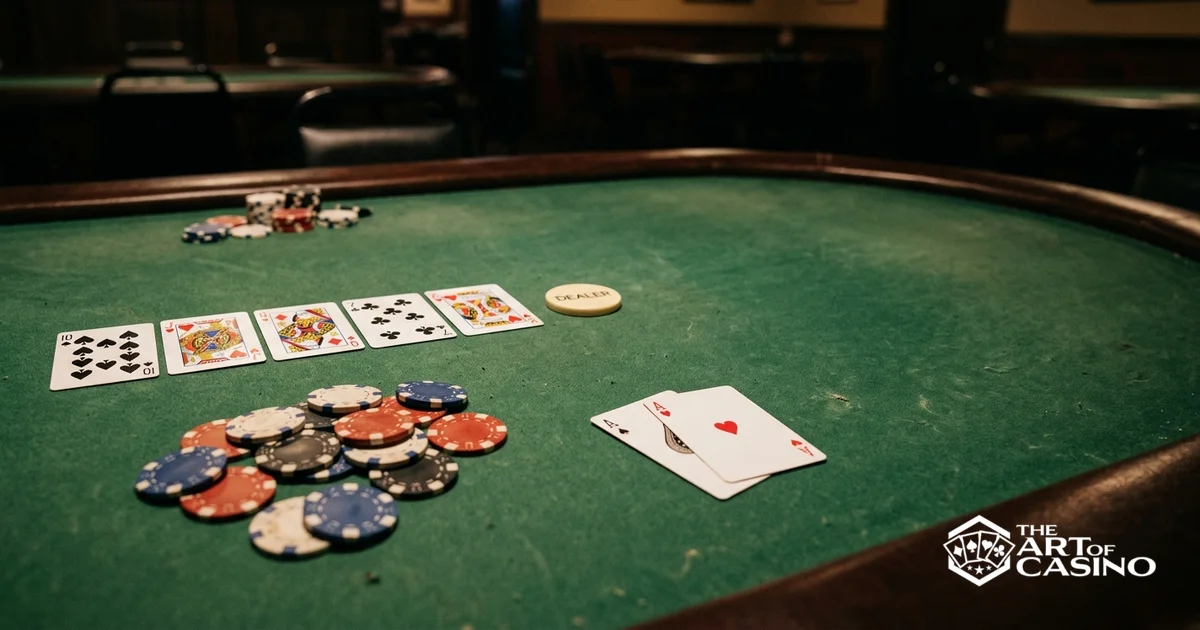
Poker dealing is fundamentally different from pit game dealing. Instead of representing the house, poker dealers facilitate games between players. This changes everything: the compensation model, the skill set, and the career path.
Poker dealers can earn excellent income, but the path looks different. Understanding these differences helps determine if poker dealing fits your goals.
How Poker Dealing Differs
Not House vs. Player
Facilitation role: Poker dealers don't play against anyone. They manage the game, dealing cards, managing pots, enforcing rules, while players compete against each other.
No house edge to protect: The casino takes a rake (percentage of pots) or charges time fees. Dealers don't influence game outcomes and have no stake in who wins.
Player conflict: Because players compete against each other, disputes arise differently than in pit games. Dealers arbitrate between players rather than between player and house.
Different Compensation
Pot-based tipping: Poker tips typically come from pot winners, not from all players generally. Win a pot, tip the dealer. This creates different income dynamics.
Not pooled (usually): Many poker rooms don't pool dealer tips. Each dealer keeps what they receive during their shifts (minus any house tip pool for support staff).
Income variation: Individual performance affects individual income more directly than in pooled pit environments.
Tournament Opportunities
Tournament fees: Poker tournaments charge entry fees that include dealer gratuities. This provides guaranteed toke income during tournament periods.
Event-based spikes: Major tournament series (like WSOP events) create income opportunities that don't exist in pit games.
Travel dealing: Some dealers travel to deal major tournament series, creating geographic flexibility.
The Poker Room Environment
Different Atmosphere
Player-centric: Poker rooms revolve around player experience. The focus is on providing good games and keeping players comfortable.
Social dynamics: Players know each other. Regulars develop relationships. The poker room has community aspects that pits lack.
Longer sessions: Poker players often play for many hours. The same players may be at your table for an entire shift.
Room Structure
Floor person: Poker room supervisors (floor persons) manage seating, settle disputes, and oversee operations. They're accessible throughout the room.
Brush: The brush manages the waiting list and seats new players. Understanding this system helps manage table dynamics.
Dealers rotate: Like pit games, dealers rotate tables regularly, typically every 20-30 minutes.
Cash Game Dealing
Game Flow
Managing the pot: Track chips in the pot, take the rake, make change, and award pots to winners.
Betting round management: Ensure action proceeds correctly, bets are proper, and all players act in turn.
Side pot handling: When players are all-in with different amounts, multiple pots form. Managing side pots requires careful attention.
Skills Required
Quick pot calculation: Counting pots quickly and accurately is essential. Players watch this closely.
Rule enforcement: Know the rules thoroughly. Poker has many specific situations requiring correct rulings.
Game pace: Keep games moving without rushing. More hands per hour means more tips (and more rake, which keeps management happy).
Income in Cash Games
Per-pot tipping: Winners typically tip $1-$2 per pot at lower stakes, more at higher stakes. This accumulates over many pots per hour.
Stake impact: Higher stakes generally produce higher tips. A $5/$10 game tips better than $1/$2.
Game type variation: No-limit games often tip better per pot than limit games (larger pots, larger tips).
Tournament Dealing
Tournament Structure
Paid from pool: Tournament registration fees include dealer gratuity pools. This money is distributed to dealers working the event.
Scheduled shifts: Tournament dealing involves scheduled coverage rather than pit-style rotations.
Increasing stakes: Blind levels increase throughout tournaments, requiring attention to structure sheets.
Tournament Skills
Structure knowledge: Know the tournament structure, blind levels, antes, breaks, payout structure.
Pace management: Tournaments need to run on schedule. Appropriate pace matters more than in cash games.
Final table awareness: As tournaments approach conclusions, intensity increases. Composure and accuracy become critical.
Income from Tournaments
Guaranteed pool: Tournament fees create guaranteed dealer compensation regardless of individual tipping.
Major series bonuses: Big tournament series (WSOP, WPT, etc.) often pay significant dealer compensation.
Per-down pay: Dealers may be paid per "down" (session) in tournaments at rates set by the tournament.
Managing Players
The Unique Challenge
Player vs. player: Conflicts arise between players, not between player and house. Dealers must arbitrate fairly.
Angle shooting: Some players push rule boundaries ("angle shooting"). Recognizing and managing this requires experience.
Regular dynamics: The same players interact repeatedly. Managing ongoing relationships and conflicts matters.
Common Situations
String betting: Players making bets in multiple motions without announcing. Proper enforcement matters.
Action disputes: "I raised" vs. "You only called" disputes. Attention to the action prevents most issues.
Table talk: What players can say during hands has rules. Enforcing appropriately without over-policing requires judgment.
Phone use: Most rooms have phone policies. Consistent enforcement prevents problems.
Difficult Players
The angle shooter: Constantly pushing rule boundaries. Consistent, fair enforcement. Call the floor when needed.
The bully: Aggressive toward other players or dealers. Don't engage; call floor immediately for serious issues.
The slow player: Takes excessive time on decisions. Gently prompt; call clock if allowed.
The criticizer: Comments on dealer speed, dealing quality, or luck. Don't engage with criticism; continue professionally.
Income Realities
Cash Game Income
Typical hourly: Cash game dealers at mid-stakes games typically earn $20-$50/hour including tips. Higher stakes can exceed this significantly.
Variability: Income varies by shift, day of week, and individual performance. Weekends and evenings are typically best.
Individual impact: Since tips often aren't pooled, dealing quality directly affects income more than in pit games.
Tournament Income
Guaranteed portion: Tournament fees provide predictable base income during events.
Major series: Dealing major tournament series can produce excellent income over concentrated periods.
Travel costs: For traveling dealers, travel expenses offset some income gains.
Compared to Pit Games
Higher ceiling: Top poker dealers at major rooms can out-earn most pit dealers.
Higher variance: Income swings more week-to-week than in pooled pit environments.
Different skills rewarded: Speed and game control matter more; personality may matter less than in pit.
Career Considerations
Poker-Specific Path
Poker room experience: Poker dealers typically stay in poker rather than moving between poker and pit. The skills differ enough that specialization makes sense.
Room quality: Better rooms attract better players who tip more. Building experience to reach better rooms matters.
Tournament travel: Some dealers develop careers around tournament circuits, traveling to major events.
Advancement Options
Floor person: First-line poker room supervisor. Manages seating, settles disputes, oversees dealers.
Tournament director: Manages tournament operations. Requires extensive tournament knowledge.
Poker room manager: Overall room responsibility. Career endpoint for poker room path.
Building a Career
Speed development: Faster dealers handle more pots per hour, earning more and pleasing management.
Rule knowledge: Deep knowledge of poker rules prevents disputes and builds reputation.
Player relationships: Regulars request good dealers. Building positive relationships increases shifts and income.
Is Poker Dealing Right for You?
Good Fit If You:
- Want more individual control over your income
- Enjoy the poker room atmosphere
- Handle player conflict well
- Value speed and efficiency
- Want tournament opportunities
- Prefer dealing one game type
Poor Fit If You:
- Want predictable, pooled income
- Dislike player-to-player conflict
- Prefer variety of multiple games
- Don't enjoy poker specifically
- Uncomfortable with income variability
Frequently Asked Questions
Do poker dealers make more than pit dealers?
At similar property quality, comparable on average. The difference is variance, poker dealer income swings more. Top poker dealers at premium rooms can out-earn pit dealers; weak poker dealers may earn less.
Are poker dealer tips pooled?
Varies by room. Many poker rooms let dealers keep individual tips. Some pool among dealers. Some pool partially (main pool plus individual). Know the system before committing to a room.
How is tournament dealing different?
Tournament pay comes from prize pool allocation rather than individual tipping. The dealing is similar but with stricter time management and structure requirements. Many dealers prefer tournaments for more predictable income.
Can I deal both poker and pit games?
Technically yes, but most dealers specialize. The skills differ, the environments differ, and the career paths diverge. Switching between them is uncommon.
What stakes should I target?
Higher stakes generally mean higher tips. But higher-stakes games have better players who expect perfect dealing. Build skills at lower stakes before moving up.
Additional Resources
- How to Deal Poker - Step-by-step procedures
- How to Become a Casino Dealer - Complete career guide
- Poker - Game rules for player perspective