

How to Play Video Poker: The Complete Strategy Guide
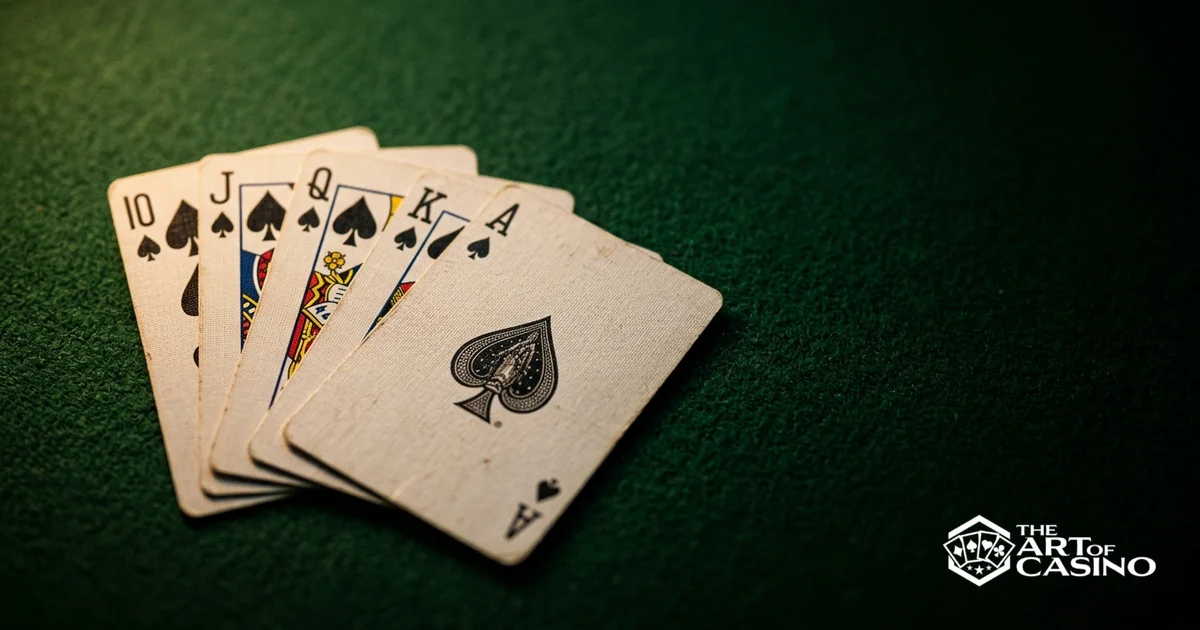
Video poker is the rare casino game that rewards skill. Unlike slot machines where every spin is pure luck, video poker gives you decisions that directly affect your expected return. Play perfectly on the right machine and the house edge can drop below 0.5%, sometimes even into positive territory with promotions or progressive jackpots.
This guide covers everything you need to play video poker intelligently: how the games work, which variants offer the best odds, and the strategies that separate informed players from everyone else.
Table of Contents
- What Is Video Poker?
- How Video Poker Works
- Hand Rankings
- Popular Video Poker Games
- Understanding Pay Tables
- Jacks or Better Strategy
- Deuces Wild Strategy
- Advanced Strategy Concepts
- Finding the Best Machines
- Bankroll Management
- Common Mistakes
- Frequently Asked Questions
- Conclusion
What Is Video Poker?
Video poker combines the decision-making of draw poker with the solo play of slot machines. You receive five cards, choose which to keep, and draw replacements for the rest. Your final hand determines your payout based on a fixed pay table.
The Appeal of Video Poker
Skill Matters: Your decisions affect outcomes. Holding the right cards versus wrong ones can mean the difference between 99.5% payback and 97%.
Transparent Odds: Unlike slots where you cannot know the RTP, video poker pay tables tell you exactly what the game pays. Calculate the mathematical return before playing.
Low House Edge: Full-pay video poker offers some of the best odds in the casino. Some machines return over 99.5% with optimal play.
Solo Play: No dealers, no other players, no pressure. Play at your own pace.
Strategy Depth: Simple to learn, years to master. Basic strategy gets you close to optimal; perfect play requires memorizing hundreds of decisions.
Video Poker vs. Slot Machines
Many players treat video poker like slots, play max coins, hit deal, hold randomly, hope for the best. This is a mistake.
| Aspect | Video Poker | Slot Machines |
|---|---|---|
| Skill impact | Significant (2-5% difference) | None |
| Odds transparency | Fully visible on pay table | Hidden RNG percentages |
| Typical RTP | 95-99.9% with optimal play | 85-95% |
| Decision required | Yes, which cards to hold | None |
| Jackpot odds | Calculable from pay table | Unknown |
A Brief History
Video poker emerged in the 1970s when Si Redd convinced IGT to develop draw poker machines. The technology that enabled video slots also made video poker possible. By the 1980s, video poker had become a Las Vegas staple, particularly popular among locals who appreciated the better odds.
Today, video poker remains most popular in Nevada, where competition keeps pay tables generous. Other jurisdictions often offer worse pay tables because players do not know to demand better.
How Video Poker Works
Understanding video poker mechanics helps you appreciate why strategy matters and how returns are calculated.
The Deal
When you press Deal, the machine uses a random number generator to select cards from a virtual 52-card deck (53 with a joker in some games). You receive five cards face up.
Key point: The replacement cards are also determined at the moment you press Deal. The machine pre-selects which cards you would draw for each possible hold combination. This is required by gaming regulations to ensure randomness.
The Decision
You choose which cards to hold (keep) and which to discard. Press the Hold button below each card you want to keep, then press Draw.
This is where skill enters. The correct holds depend on:
- Your current hand
- The specific game variant
- The pay table
- The cards you have received
The Draw
Discarded cards are replaced from the remaining deck. Your final five-card hand is compared against the pay table, and you receive any applicable payout.
Random Number Generators
Every video poker machine uses an RNG certified by gaming regulators. The RNG ensures each deal is random and independent, previous hands do not influence future hands.
The RNG continuously cycles through numbers even when no one is playing. The exact millisecond you press Deal determines which cards you receive. This makes outcomes unpredictable while ensuring fair probabilities.
Hand Rankings
Video poker uses standard poker hand rankings. Know these from highest to lowest:
| Rank | Hand | Description | Example |
|---|---|---|---|
| 1 | Royal Flush | A-K-Q-J-10, same suit | A♠ K♠ Q♠ J♠ 10♠ |
| 2 | Straight Flush | Five consecutive, same suit | 8♥ 7♥ 6♥ 5♥ 4♥ |
| 3 | Four of a Kind | Four cards same rank | 9♠ 9♥ 9♦ 9♣ 2♠ |
| 4 | Full House | Three of a kind + pair | K♠ K♥ K♦ 5♣ 5♠ |
| 5 | Flush | Five cards same suit | A♦ J♦ 8♦ 6♦ 3♦ |
| 6 | Straight | Five consecutive cards | 10♥ 9♣ 8♦ 7♠ 6♥ |
| 7 | Three of a Kind | Three cards same rank | 7♠ 7♥ 7♦ K♣ 2♠ |
| 8 | Two Pair | Two different pairs | Q♠ Q♥ 5♦ 5♣ 9♠ |
| 9 | One Pair | Two cards same rank | J♠ J♥ A♦ 8♣ 3♠ |
| 10 | High Card | Highest card only | A♠ J♥ 8♦ 5♣ 2♠ |
Note: In most video poker games, only certain hands pay. Jacks or Better requires at least a pair of Jacks to win. Lower pairs return nothing.
Wild Card Games
In games like Deuces Wild, hand rankings adjust because wild cards make strong hands more common:
- Four deuces often pays separately (highest)
- Royal flush with wild card pays less than natural royal
- Three of a kind threshold may replace pair requirement
Popular Video Poker Games
Different video poker variants offer different odds and require different strategies.
Jacks or Better
The original and most common video poker game. You need at least a pair of Jacks to win.
Why start here: Simplest strategy, widely available, good pay tables still exist.
Full-pay version: 9/6 Jacks or Better (9 coins for full house, 6 for flush per coin bet)
- Expected return: 99.54% with optimal play
Common downgrades:
- 8/5 (97.30%)
- 7/5 (96.15%)
- 6/5 (95.00%)
Deuces Wild
All four 2s are wild, substituting for any card. No payout for pairs, minimum winning hand is three of a kind.
Appeal: More action, more big hands, different strategy challenge.
Full-pay version: "Full-pay" Deuces Wild
- Expected return: 100.76% with optimal play (rare, hard to find)
Common versions:
- "Not So Ugly" Deuces Wild (99.73%)
- "Ugly Deuces" (98.91%)
- Airport Deuces (94.82%), avoid
Bonus Poker
Similar to Jacks or Better with bonus payouts for four-of-a-kind hands.
Appeal: Higher variance with big four-of-a-kind payouts.
Full-pay version: 8/5 Bonus Poker
- Expected return: 99.17% with optimal play
Double Bonus Poker
Enhanced bonuses for quads, with different payouts based on the rank.
Appeal: Four Aces pays 160 coins (vs. 25 in Jacks or Better).
Full-pay version: 10/7 Double Bonus
- Expected return: 100.17% with optimal play (rare)
Common version: 9/7 Double Bonus (99.11%)
Double Double Bonus Poker
Even larger quad bonuses, with kicker bonuses (four aces with a 2, 3, or 4 kicker pays extra).
Appeal: Huge upside on premium quads.
Full-pay version: 9/6 Double Double Bonus
- Expected return: 98.98%
Higher variance than standard games, expect longer losing streaks.
Joker Poker (Kings or Better)
Uses a 53-card deck with one joker wild. Minimum winning hand is usually a pair of Kings.
Appeal: One wild card adds excitement without dramatically changing strategy.
Full-pay version: Varies by pay table
- Best versions return 99%+
Pick 'Em Poker
Different format: receive four cards face up plus two sets of two cards (only one card visible in each set). Keep one set of two to make your five-card hand.
Appeal: Simpler decisions, reduced variance.
Return: 99.95% with optimal play, one of the best odds in any casino game.
Understanding Pay Tables
Pay tables determine everything in video poker. The same game name with different pay tables can swing returns by 5% or more.
Reading a Pay Table
A typical Jacks or Better pay table:
| Hand | 1 Coin | 2 Coins | 3 Coins | 4 Coins | 5 Coins |
|---|---|---|---|---|---|
| Royal Flush | 250 | 500 | 750 | 1000 | 4000 |
| Straight Flush | 50 | 100 | 150 | 200 | 250 |
| Four of a Kind | 25 | 50 | 75 | 100 | 125 |
| Full House | 9 | 18 | 27 | 36 | 45 |
| Flush | 6 | 12 | 18 | 24 | 30 |
| Straight | 4 | 8 | 12 | 16 | 20 |
| Three of a Kind | 3 | 6 | 9 | 12 | 15 |
| Two Pair | 2 | 4 | 6 | 8 | 10 |
| Jacks or Better | 1 | 2 | 3 | 4 | 5 |
Why Max Coins Matter
Notice the Royal Flush payout: 250 per coin for 1-4 coins, but 4000 for 5 coins. That is 800 per coin at max bet versus 250 otherwise.
Always bet max coins. If max bet is too expensive, play lower denomination at max coins rather than higher denomination at fewer coins.
The 9/6 Shorthand
Video poker players reference games by their full house and flush payouts. "9/6 Jacks or Better" means 9 coins for a full house and 6 for a flush (per coin bet).
Common pay table names:
- 9/6 Jacks or Better (99.54%), the gold standard
- 8/5 Jacks or Better (97.30%), common in many casinos
- 9/5 Jacks or Better (98.45%), deceptively close to 9/6
- 8/6 Jacks or Better (98.39%), another common downgrade
Calculating Expected Return
Expected return combines the probability of each hand with its payout:
Expected Return = Σ (Probability × Payout) for all possible outcomes
For 9/6 Jacks or Better with optimal play:
- Royal flush contributes about 2%
- Full house and flush contribute most of the return
- Jacks or better pairs return most of your money (most frequent winning hand)
Total: 99.54% expected return
Finding Pay Table Information
Before playing:
- Look at the machine's pay table display
- Note the full house and flush payouts
- Check online databases (vpFREE2, Wizard of Odds) for expected return
- Compare to nearby machines, casinos often mix pay tables
Jacks or Better Strategy
Jacks or Better strategy involves ranking hands by expected value and always choosing the option with highest EV.
Basic Strategy (Simplified)
Hold cards in this priority order (highest first):
- Royal flush, straight flush, four of a kind
- Four to a royal flush (even over a made flush or straight)
- Full house, flush, straight, three of a kind
- Four to a straight flush
- Two pair
- High pair (Jacks or better)
- Three to a royal flush
- Four to a flush
- Low pair (2s through 10s)
- Four to an outside straight
- Two suited high cards
- Three to a straight flush
- Two unsuited high cards (lowest two if three+)
- Suited 10 with one high card
- One high card
- Discard everything
Key Strategic Concepts
Break up a made hand for a royal draw: If you have a flush but four cards to a royal, break the flush. The royal draw has higher expected value.
Low pairs over high cards: A pair of 4s beats holding AK unsuited. The pair wins immediately on trips, two pair, or quads.
Never hold a kicker: If you have three of a kind, hold only the trips. Adding a "kicker" reduces your chances of improvement.
Outside straights beat inside straights: 5-6-7-8 (four to an outside straight) has eight outs. 5-6-8-9 (inside straight) has only four.
Example Hands
Hand: K♠ K♥ 10♦ 8♣ 3♠ Hold: K♠ K♥ (high pair beats any three to a flush, no straight potential)
Hand: A♥ K♥ Q♥ J♥ 4♠ Hold: A♥ K♥ Q♥ J♥ (four to a royal, even if you had a made hand)
Hand: 7♠ 7♦ 8♠ 9♠ 10♠ Hold: 8♠ 9♠ 10♠ (four to a straight flush beats low pair)
Hand: A♠ K♦ Q♣ J♥ 5♠ Hold: A♠ K♦ Q♣ J♥ (four to an outside straight beats any other option)
Hand: 9♥ 8♥ 7♦ 6♣ 2♠ Hold: 9♥ 8♥ 7♦ 6♣ (four to a straight, outside draw)
Strategy Cards
Laminated strategy cards are available for purchase and legal to use in casinos. They show the complete hold rankings for specific games and pay tables. Using one eliminates guesswork.
Deuces Wild Strategy
Deuces Wild requires completely different strategy because of the wild cards.
The Role of Deuces
A deuce substitutes for any card. Four deuces is the second-highest hand. Even one deuce dramatically changes optimal plays.
Strategy by Number of Deuces
No Deuces: Prioritize potential wild card draws. Flush and straight draws become more valuable because any deuce completes them.
- Pat hands (straight or better)
- Four to a royal flush
- Four to a straight flush
- Three of a kind
- Four to a flush
- Consecutive suited cards
- Three to a royal flush
- One pair (discard second pair if two pair)
- Four to an outside straight
- Three to a straight flush
- Discard everything
One Deuce: The deuce gives you at least three of a kind potential.
- Pat hands (full house or better)
- Four to a royal flush
- Four to a straight flush
- Four of a kind or better
- Three to a royal flush
- Three to a straight flush
- Deuce only
Two Deuces: You already have four of a kind minimum potential.
- Pat hands (four of a kind or better)
- Four to a royal flush
- Two deuces only
Three Deuces:
- Pat hands
- Three deuces only (draw for fourth deuce)
Four Deuces: Hold all four. Never break four deuces.
Key Differences from Jacks or Better
- Never hold a single high card: Without wild cards, high cards have insufficient value.
- Break up two pair: Keep one pair only, the second pair blocks potential improvement.
- Straights and flushes have more value: Deuces complete draws more often.
- Three of a kind is common: Adjust your expectations for "big" hands.
Advanced Strategy Concepts
Perfect play requires understanding nuanced situations where basic strategy oversimplifies.
Penalty Cards
Sometimes holding a high card prevents other draws. For example:
Hand: A♥ J♥ 10♦ 5♦ 3♣
Basic strategy says hold two suited high cards (A♥ J♥). But the 10♦ is a penalty card, holding AJ means discarding a card that could have completed a straight.
Advanced strategy accounts for these penalties, though the EV differences are usually small (hundredths of a percent).
Composition-Dependent Strategy
The same four cards might call for different plays depending on the fifth card:
- A♣ K♣ Q♣ J♣ with 9♣: Hold flush (straight flush impossible with missing 10)
- A♣ K♣ Q♣ J♣ with 7♠: Hold four to royal (no penalty)
Progressive Jackpots
When royal flush jackpots grow, strategy changes. Higher royal payouts make royal draws more valuable:
- At certain levels, break a flush for a three-card royal
- At extreme levels, strategy shifts significantly
Calculate the breakeven point: when does the progressive add enough EV to change decisions?
Multi-Hand Games
Triple Play, Five Play, Ten Play, and higher variants deal from independent decks. The base strategy remains identical, but variance increases dramatically:
- Same EV per hand
- Faster play speed
- Higher variance per session
- Bankroll requirements multiply
Expected Value Calculations
For any decision, calculate EV:
EV = Σ (Probability of each outcome × Payout)
Example: Should you hold J♠ Q♠ or Q♠ only?
Holding J♠ Q♠:
- Calculate all possible three-card draws
- Weight by probability and payout
- Sum for total EV
Holding Q♠:
- Calculate all possible four-card draws
- Weight and sum
Compare. Higher EV wins.
Software and websites perform these calculations for every possible hand.
Finding the Best Machines
Not all video poker is created equal. Finding good games requires effort.
Where to Look
Las Vegas locals casinos: Station Casinos, Boyd Gaming, and off-Strip properties often offer the best pay tables. Competition for local players keeps games sharp.
Downtown Las Vegas: Better than the Strip, worse than locals spots.
The Strip: Generally poor pay tables with notable exceptions.
Online casinos: Variable. Some offer full-pay games; others are worse than live casinos.
Other jurisdictions: Usually worse than Nevada. Native American casinos, Atlantic City, and regional casinos typically offer inferior pay tables.
Resources for Finding Good Games
vpFREE2.com: Database of video poker games by location. Lists current surveys of what is available where.
Wizard of Odds: Pay table analysis and expected returns for all common games.
Las Vegas Advisor: Publishes video poker information for Vegas visitors.
Casino websites: Some post their video poker offerings, though details may be incomplete.
What to Look For
- 9/6 Jacks or Better at any denomination
- Full-pay Deuces Wild (rare)
- 10/7 Double Bonus (rare, positive EV)
- Not So Ugly Deuces Wild (common, good)
- Pick 'Em Poker (99.95% if you can find it)
What to Avoid
- 6/5 Jacks or Better (95%, worse than many slots)
- Airport video poker (notoriously bad pay tables)
- Machines without visible pay tables
- Any game you cannot identify the return for
The Trade-off: Location vs. Pay Table
A 99.5% game in an inconvenient location beats a 96% game in a convenient one. But factor in:
- Travel time and cost
- Comps and player's club value
- Playing environment preferences
- Bankroll constraints at higher denominations
Bankroll Management
Video poker's variance requires adequate bankroll to survive downswings.
Variance Reality
Even with perfect play on 99.5% games, you will lose more sessions than you win. The royal flush contributes about 2% of total return, but you hit it only once every 40,000 hands on average.
Without royals, your effective return drops to about 97.5%. Sessions without royals will usually be losers.
Bankroll Guidelines
Recreational play: Bring 200-300 times your bet amount per session. For $1.25 per hand (quarter machine, max coins), bring $250-$375.
Serious play: 1,000+ times bet amount available across sessions. Larger bankroll smooths variance.
Professional play: 2,000-5,000 times bet amount, depending on game variance and risk tolerance.
Session Limits
Loss limit: Decide maximum acceptable loss before playing. Stop if you reach it.
Win goal: Optional but useful. Locking in wins prevents giving them all back.
Time limit: Extended play leads to fatigue and mistakes. Take breaks.
Variance by Game
Higher variance = larger swings = bigger bankroll needed
| Game | Variance | Bankroll Multiplier |
|---|---|---|
| Jacks or Better | Low | 1x |
| Bonus Poker | Medium | 1.2x |
| Double Bonus | High | 1.5x |
| Double Double Bonus | Very High | 2x |
| Deuces Wild | Medium | 1.3x |
Slot Club Benefits
Join the casino's player's club. Video poker typically earns:
- Cash back (0.1-0.3% typical)
- Free play
- Comps (meals, rooms)
- Tier points for status
These benefits add 0.2-0.5% to your effective return. Combined with good pay tables, total return can exceed 100%.
Common Mistakes
Avoid these errors that cost players money.
Playing Less Than Max Coins
The royal flush bonus for five coins is disproportionately large. Playing fewer coins reduces your return by 1-2%.
If max coins costs too much, drop to a lower denomination.
Not Checking the Pay Table
A 9/6 machine next to an 8/5 machine looks identical. The difference is 2.24% of everything you wager. Always verify before playing.
Holding a Kicker
Never hold extra cards with three of a kind or two pair. Kickers reduce improvement opportunities.
Wrong: Hold 7-7-7-A Right: Hold 7-7-7
Breaking Up Winning Hands Incorrectly
Learn when to break made hands:
- Break a flush for four to a royal
- Never break a straight for a gutshot straight flush draw
- Check strategy card if unsure
Chasing Progressive Jackpots
Large progressives change strategy slightly but do not turn bad games into good ones. A $10,000 progressive on a 6/5 machine is still a bad bet.
Playing Too Fast
Speed errors cost money. Take time to analyze each hand. Using strategy cards is legal and prevents mistakes.
Emotional Decision-Making
After losing hands, stick to strategy. "Gut feelings" about which cards to hold have no mathematical basis. The RNG does not respond to hunches.
Frequently Asked Questions
Conclusion
Video poker rewards knowledge. Unlike most casino games, your decisions directly affect outcomes. The difference between informed and uninformed play is real money, often 2-5% of everything wagered.
For best results:
- Find full-pay machines (9/6 Jacks or Better or equivalent)
- Always bet maximum coins
- Learn and apply basic strategy
- Use strategy cards until decisions are automatic
- Join the player's club for added value
- Manage your bankroll for the long run
The video poker advantage:
- Transparent odds (pay tables tell you everything)
- Low house edge with skill
- Solo play at your own pace
- Potential for positive expectation with promotions
Video poker is not gambling on luck alone, it is a game where preparation and discipline translate to better results. Master the basics, find good machines, play correctly, and video poker becomes one of the best bets in the casino.
Good luck at the machines.
Video Poker Strategy & Smart Play Guides
11 min read
15 min read
Video Poker Game Variations
0.83% (8/5 pay table)
0.27% (NSUD) to -0.76% (Full Pay)
0.46% (9/6 pay table)
Explore the players and pioneers who shaped casino gaming in our Hall of Fame.