
Roulette dealing requires a distinct skill set that differs significantly from card games. The focus shifts from card handling to chip manipulation, ball spinning, and managing the unique visual spectacle of the wheel.
Roulette dealers develop specialized abilities, quick chip sorting, accurate payouts at various odds, and the showmanship that makes the game appealing. While not as complex as craps, roulette has its own challenges and rewards.
What Makes Roulette Different
The Visual Element
Roulette is inherently visual. Players watch the ball spin, the wheel turn, and results reveal themselves dramatically. This visual nature affects the dealer's role.
Creating spectacle: The ball spin, the anticipation, the reveal, roulette has built-in drama. Good dealers enhance rather than diminish this element.
Pace and timing: Unlike card games where speed often matters, roulette has natural rhythm. The spin takes time. Managing this pace without creating dead time is an art.
Visibility: Every action happens in full view. Chip handling, payouts, and game management are all visible to players and surveillance.
Solo Operation
Unlike craps (four-person crew), roulette is typically dealt by one person managing the entire game.
Self-reliance: No crewmates to assist with complex situations. The dealer handles everything, betting, spinning, paying, collecting.
Pace control: The single dealer controls game pace entirely. Finding the right rhythm for each table matters.
Responsibility: All aspects of game integrity rest with one person. Vigilance cannot be shared.
Different Math
Roulette payouts follow different patterns than blackjack:
- Straight up (single number): 35:1
- Split (two numbers): 17:1
- Street (three numbers): 11:1
- Corner (four numbers): 8:1
- Six line (six numbers): 5:1
- Dozens/Columns: 2:1
- Even money bets: 1:1
Learning these payouts and calculating them quickly for various bet sizes is the core mathematical challenge.
Skills Required
Chip Handling
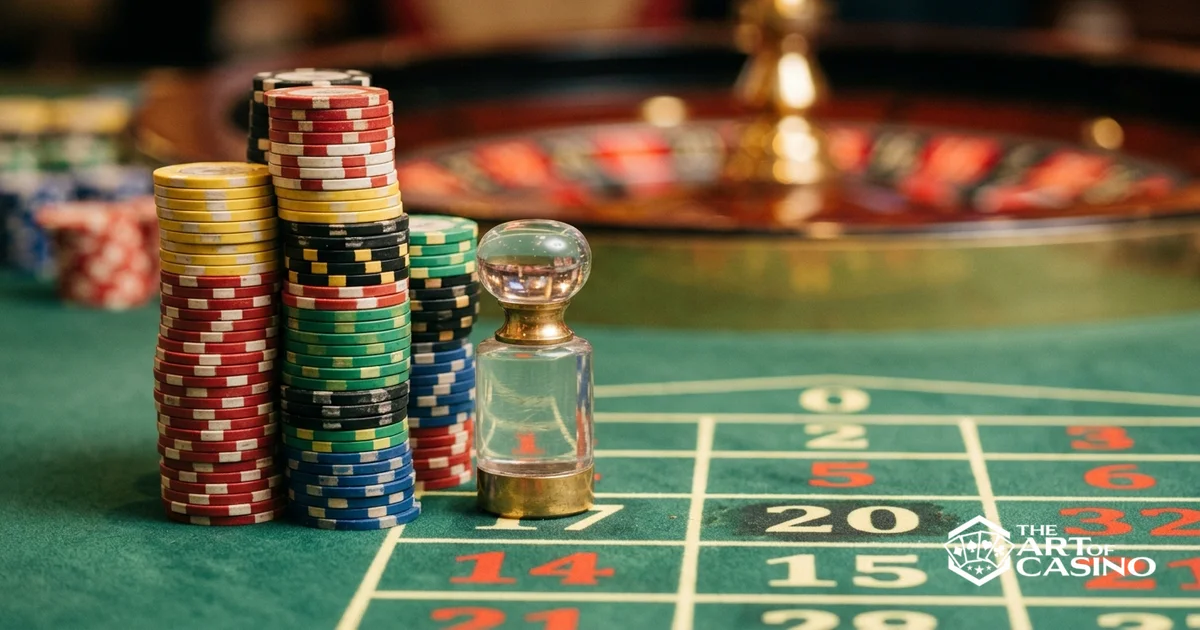
Roulette chip identification: Unlike standard casino chips, roulette uses table-specific colored chips. Each player gets a distinct color. The dealer must:
- Assign colors to arriving players
- Track which color belongs to whom
- Remember each color's denomination
- Convert roulette chips to cash chips when players leave
Stacking and sorting: Roulette involves handling many chips quickly:
- Sorting scattered chips by color after each spin
- Building neat stacks for payouts
- Mucking (collecting) losing bets efficiently
- Cutting accurate payouts from multiple denominations
The sweep: Clearing losing bets after a spin requires smooth technique, sweeping chips toward the dealer without disturbing winning bets or the marker.
Ball Spinning
Consistent spin: The ball spin should be reasonably consistent, enough rotations to be random, consistent timing so players can plan their betting.
Ball control: Launching the ball smoothly without awkward bounces or premature drops takes practice.
Timing calls: Calling "no more bets" at the right moment, after adequate betting time but before the outcome becomes predictable.
Payout Accuracy
Quick calculations: 35:1 on $7 is $245. This calculation must be instant, with chips cut and placed before the next spin.
Multiple payouts: A single winning number often involves multiple payouts, straight up, splits, corners, streets, each at different odds.
Verification: Players watch payouts closely. Accuracy builds trust; errors create disputes.
A Typical Roulette Shift
Game Flow
Between spins:
- Clear losing bets
- Place marker on winning number
- Calculate and pay all winning bets
- Remove marker
- Announce "Place your bets"
- Allow betting time
- Spin the ball
- Call "No more bets"
- Wait for ball to settle
- Announce winning number
- Repeat
Pace Management
Finding rhythm: Games typically run 25-35 spins per hour. Too fast frustrates bettors; too slow loses their interest.
Reading the table: Busy tables with many bets need more time between spins. Quiet tables can move faster.
Dead time: Minimize gaps where nothing is happening. Keep the game flowing smoothly.
Player Management
Color assignment: When players join, assign a distinct chip color and establish their denomination.
Bet clarity: Ensure bets are placed clearly. Ambiguous bets create disputes.
Color-up process: When players leave, convert their roulette chips to standard casino chips they can use elsewhere or cash.
Income as a Roulette Dealer
Relative Position
Roulette income typically falls between blackjack and craps, better than basic blackjack, not as strong as good craps action.
Why roulette tips moderately:
- Slower pace means fewer tip opportunities per hour
- Less communal excitement than craps
- Consistent, moderate tips rather than dramatic spikes
When Roulette Shines
Busy tables: Full roulette tables with enthusiastic players generate good tips.
Big winners: A player hitting their number multiple times often tips generously.
Entertainment value: Players who enjoy the show tend to tip for the experience.
Income Expectations
Roulette dealers at most properties earn comparable to blackjack dealers. The game's moderate pace and typical bet sizes produce steady but not exceptional income.
Best roulette income:
- High-limit roulette with wealthy players
- Properties with strong roulette programs
- Tables that run consistently busy
Player Interaction
The Roulette Atmosphere
Roulette attracts a different crowd than blackjack or craps. Many players enjoy the leisurely pace and social atmosphere.
Social tables: Roulette often becomes social, with players chatting while waiting for spins. This can be pleasant or distracting depending on the group.
Superstition: Roulette players are often highly superstitious, lucky numbers, hot/cold patterns, favorite sections. Acknowledge without encouraging.
Visual focus: Players watch the wheel intently. Any distraction or inconsistency in spinning draws attention.
Common Situations
The systems player: Believes they have a winning system (Martingale, Fibonacci, etc.). Systems don't work mathematically, but that's not the dealer's problem. Serve them professionally.
The number player: Plays the same numbers every spin. Remember their preferences, it builds rapport.
The chaser: Keeps increasing bets after losses. Watch for signs of problem gambling, but avoid unsolicited advice.
The celebration: Big wins on straight-up bets are exciting. Appropriate acknowledgment is professional; excessive celebration is not.
Career Considerations
Adding Roulette to Your Skills
Why learn roulette:
- Increases scheduling flexibility
- Different skill set than card games
- Some players specifically prefer roulette
- Adds variety to dealing day
Learning curve: Roulette is moderately difficult, harder than blackjack, easier than craps. The chip handling and payout calculations take weeks to develop.
Roulette as Primary Game
Roulette-focused properties: Some casinos, particularly European-style properties, emphasize roulette. Roulette skills are especially valuable there.
Limited roulette: Many American casinos have few roulette tables. Roulette-only dealers may have limited scheduling options.
Career Path
Roulette fits into the standard dealing career path:
- Learn blackjack (foundation)
- Add roulette (versatility)
- Add craps (premium earning)
- Advance to supervision if desired
The Challenges
Chip Tracking
Color memory: Remembering which player has which color, and what denomination each represents, requires constant attention.
Bet placement: Players place bets in specific spots. Tracking who placed what, especially on busy tables, challenges concentration.
Dispute Resolution
Unclear bets: Chips that aren't clearly on a number or between numbers create disputes. Ruling consistently and fairly matters.
Payout disputes: Players may claim different bets than what was placed. Surveillance review may be needed.
Physical Demands
Reaching: Roulette tables are large. Reaching across to place markers, collect chips, and pay winners strains shoulders and back.
Standing position: Like other dealing, roulette involves extended standing with repetitive motions.
Is Roulette Dealing Right for You?
Good Fit If You:
- Enjoy methodical, visual work
- Have strong chip handling skills
- Prefer solo operation to crew work
- Like the social pace of roulette
- Want to add variety to your dealing skills
Poor Fit If You:
- Prefer fast-paced action
- Struggle with chip sorting and color memory
- Want maximum tip potential (craps is better)
- Dislike repetitive visual tasks
Frequently Asked Questions
Is roulette harder to learn than blackjack?
Moderately harder. Blackjack procedures are simpler, but roulette requires different skills, chip color management, multi-odds payouts, and ball spinning technique. Most dealers find roulette takes a few weeks longer to master than blackjack.
Do roulette dealers make good money?
Roulette income is typically comparable to blackjack, solid but not exceptional. The slower pace means fewer opportunities per hour. However, busy roulette tables with enthusiastic players can generate strong tips.
What's the hardest part of dealing roulette?
Most dealers cite chip management, tracking colors, calculating multi-odds payouts quickly, and clearing the layout efficiently while avoiding errors.
Can I deal only roulette?
At properties with strong roulette programs, possibly. But most American casinos have limited roulette tables. Learning multiple games provides better career options.
How do I learn ball spinning?
Practice extensively before dealing live. Consistent spin comes from repetition. The goal is enough rotations for randomness with reasonable timing for betting.
Additional Resources
- How to Deal Roulette - Step-by-step procedures
- How to Become a Casino Dealer - Complete career guide
- Roulette - Game rules for player perspective