

How to Play Blackjack: Rules, Payouts, Odds, and Winning Strategy
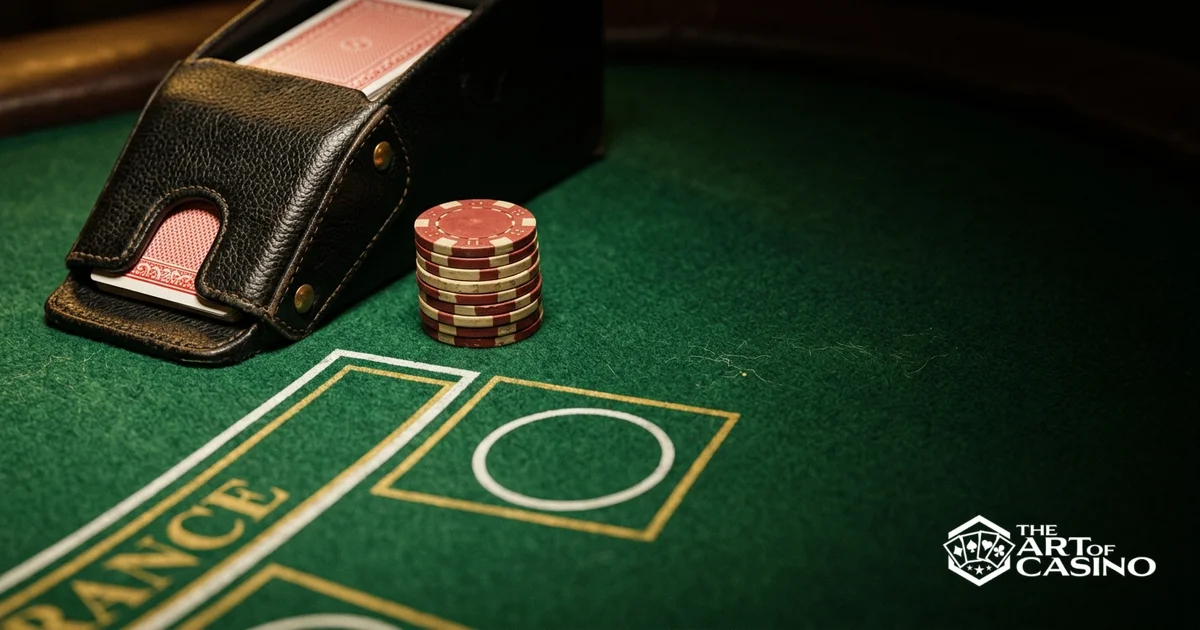
Blackjack is the most popular table game in casinos worldwide, and for good reason. It combines simple rules with genuine strategic depth, offering players the lowest house edge of any casino game when played correctly. Whether you have never touched a card or you are looking to sharpen your skills before your next casino visit, this guide covers everything you need to know about blackjack, from your first hand to advanced concepts that separate casual players from skilled ones.
This is not a quick overview. This is the complete resource for understanding blackjack as it is actually played in real casinos, written by someone who has spent thousands of hours at the tables.
Table of Contents
- What Is Blackjack?
- Quick Start Guide
- How Blackjack Works: Full Casino Procedure
- Complete Rules of Blackjack
- Payouts and House Edge
- Core Strategy Overview
- Odds and Probability
- Table Etiquette and Real Casino Tips
- All Blackjack Variations
- Equipment and Table Configurations
- Blackjack Myths and Mistakes
- Frequently Asked Questions
- Conclusion
What Is Blackjack?
Blackjack is a card game where you compete against the dealer to build a hand closer to 21 without going over. Each player receives two cards and must decide whether to take more cards or stand with what they have. The dealer follows fixed rules, and whoever gets closer to 21 wins.
That description is accurate but incomplete. To truly understand blackjack, you need to understand why this particular game has captivated players for centuries and why it remains the most played table game in every casino on earth.
The Goal of Blackjack
Your objective is simple: beat the dealer. You can do this in three ways:
- Get a hand total higher than the dealer without exceeding 21
- Have the dealer exceed 21 (bust) while you remain at 21 or under
- Be dealt a natural blackjack (an Ace plus a ten-value card) when the dealer does not have one
You are not trying to get as close to 21 as possible. You are trying to beat the dealer. This distinction matters enormously. A hand of 12 wins just as much money as a hand of 21 if the dealer busts with 25.
Why Blackjack Has the Lowest House Edge
Every casino game has a mathematical edge favoring the house. In roulette, it is 2.7% to 5.26%. In craps, the pass line carries 1.41%. Slot machines typically hold 2% to 15% of every dollar wagered.
Blackjack, played with perfect basic strategy, has a house edge between 0.4% and 0.8% depending on the specific rules. This is the lowest of any casino game, and it is not close.
Why is blackjack different? Because your decisions matter. In roulette, every bet has the same expected return regardless of where you place your chips. In blackjack, hitting when you should stand, or standing when you should hit, directly increases your losses. The game rewards study and punishes poor decisions.
The mathematics of blackjack also favor players in subtle ways. When you receive a natural blackjack, you are paid 3:2 (or should be, at proper tables). When the dealer gets blackjack, you only lose your original bet. This asymmetry, combined with your ability to double down and split at advantageous moments, creates a game where skilled players lose less than the theoretical edge would suggest.
Why Blackjack Is Skill-Influenced
Unlike pure gambling games, blackjack presents you with decisions that have correct and incorrect answers. When you hold 16 against a dealer showing 7, there is a mathematically optimal play. Make that play over thousands of hands, and you will lose less money than someone who guesses.
The skill element is not overwhelming. You cannot become a long-term winner through skill alone without counting cards, which casinos actively prevent. But you can dramatically reduce your expected losses from roughly 2% (playing by instinct) to under 0.5% (playing perfect basic strategy). Over a weekend of gambling, this difference amounts to hundreds of dollars.
A Brief History
Blackjack evolved from earlier European card games, most notably the French game Vingt-et-Un (Twenty-One) popular in the 1700s. The game arrived in America and spread through gambling halls in the 1800s. Early American casinos offered a bonus payout for a hand containing the ace of spades and a black jack, giving the game its modern name.
The game exploded in popularity after 1962, when Edward O. Thorp published "Beat the Dealer," the first mathematically rigorous analysis of blackjack strategy. Thorp demonstrated that card counting could give players an edge over the house, transforming blackjack from a gambling game into a beatable one. Casinos responded with countermeasures, but the publicity established blackjack as the thinking player's game.
Today, blackjack tables outnumber any other table game in most casinos. The combination of simple rules, fast action, low house edge, and the perception of skill-based play makes it irresistible to millions of players.
Quick Start Guide
If you have never played blackjack and want to sit down at a table within the next hour, this section gives you everything you need. Read the full guide later; this gets you started immediately.
The Goal in One Sentence
Get closer to 21 than the dealer without going over.
Card Values
- Number cards (2 through 10): Worth their face value
- Face cards (Jack, Queen, King): Worth 10
- Ace: Worth 1 or 11, whichever helps your hand more
The Five Basic Actions
- Hit: Take another card
- Stand: Keep your current hand, take no more cards
- Double Down: Double your bet, receive exactly one more card, then stand
- Split: If you have two cards of the same value, separate them into two hands
- Surrender: Give up half your bet and end the hand (not always available)
How One Round Works
- You place a bet in the betting circle
- The dealer gives you two cards face up
- The dealer takes two cards, one face up and one face down
- You decide to hit, stand, double, or split
- Once you finish, the dealer reveals their hidden card and plays their hand
- The dealer must hit on 16 or less, stand on 17 or more
- Whoever is closer to 21 without busting wins
What You Need to Sit Down
- Cash to buy chips (minimum varies, usually $10 to $25 per hand)
- Basic knowledge of hand signals (tap the table to hit, wave your hand to stand)
- Enough bankroll for at least 20 hands at the table minimum
The Fastest Path to Being Table-Ready
Memorize these four rules and you will make correct decisions most of the time:
- Always stand on 17 or higher
- Always hit on 11 or lower
- Always split Aces and 8s
- Never take insurance
That is enough to play. You will make some mistakes on the edge cases, but you will not embarrass yourself or make catastrophic errors. Read the rest of this guide to eliminate those remaining mistakes.
How Blackjack Works: Full Casino Procedure
Understanding the complete flow of a blackjack hand, from sitting down to collecting your winnings, removes the anxiety of playing in a real casino. Nothing that happens at the table should surprise you after reading this section.
Before the Deal: Joining a Table
Walk up to any blackjack table with an open seat. Look at the placard showing the minimum and maximum bets. If the minimum is within your budget, wait for the current hand to complete, then sit down.
Place cash on the felt (never hand it directly to the dealer) and say "change, please" or simply wait. The dealer will count your cash, announce the amount to the pit boss, and slide you an equivalent value in chips. This process is called "buying in."
You are now ready to play. There is no need to announce yourself or wait for permission.
How Bets Work
Before any cards are dealt, place your bet in the betting circle directly in front of your seat. Once cards start coming out, you cannot touch your bet.
The minimum bet is displayed on the table placard. You can bet any amount between the minimum and maximum, but you must use casino chips, not cash. Some tables accept cash plays, but using chips is standard.
Your initial bet is called the "original wager." Depending on your cards, you may have opportunities to add to this bet (doubling down, splitting) during the hand.
How Cards Are Dealt
The dealer starts with the player to their left (first base) and deals one card face up to each player, moving clockwise. After every player has one card, the dealer takes one card for themselves, usually face up.
The dealer then deals a second card face up to each player in the same order. The dealer takes their second card face down. This hidden card is called the "hole card."
Some casinos deal cards face down to players. The procedure is identical, but players must pick up their cards (with one hand only) to see them. Face-down games are less common today but still exist, particularly in single-deck and double-deck games.
Shoe Types and Dealing Methods
Shoe games: Six or eight decks are combined and placed in a plastic device called a shoe. The dealer pulls cards from the shoe one at a time. This is the most common configuration in modern casinos.
Handheld games: One or two decks are held in the dealer's hand. Cards are dealt face down to players. These games move slightly slower but offer better odds (fewer decks means lower house edge, all else equal).
Continuous shuffling machines (CSMs): Cards are returned to a machine after each round and continuously shuffled. These eliminate the possibility of card counting and slightly speed up the game. Serious players avoid CSM tables.
What "Breaking the Shoe" Means
A plastic cut card is inserted into the shoe, typically about one to two decks from the back. When this cut card appears during dealing, the current round is completed, and then the dealer shuffles all the cards before continuing.
The percentage of cards dealt before the shuffle is called "penetration." Better penetration (more cards dealt) benefits card counters. Most casinos aim for 75% to 85% penetration.
Dealer Procedure
The dealer follows strict rules with no room for decision-making. After all players have acted, the dealer reveals their hole card and plays according to the following rules:
- Dealer must hit on any hand totaling 16 or less
- Dealer must stand on any hand totaling 17 or more
- In some casinos, the dealer must hit on "soft 17" (an Ace and a 6)
The dealer has no choices. They cannot double down, split, or surrender. They must follow these rules exactly. This is why blackjack strategy exists: you are playing against a predictable machine, not a thinking opponent.
Player Actions and Their Timing
After receiving your two cards, you must act before the dealer moves to the next player. Your options:
Hit: Tap the table with your finger. The dealer will give you another card. You can hit as many times as you want until you stand or bust.
Stand: Wave your hand horizontally over your cards, palm down. The dealer moves to the next player.
Double Down: Place an additional bet (up to your original bet) next to your original wager. You will receive exactly one more card and automatically stand. You cannot hit again.
Split: If your first two cards are a pair (two 8s, two Kings, etc.), place a second bet equal to your original next to it. The dealer separates your cards into two hands, deals a second card to each, and you play each hand independently.
Surrender: In games that offer it, say "surrender" before taking any other action. You forfeit half your bet and the hand ends. Not all casinos offer surrender.
End of Round Resolution
After all players have acted, the dealer reveals their hole card and completes their hand according to house rules.
If the dealer busts (exceeds 21), all remaining players win even money on their bets.
If the dealer does not bust, each player's hand is compared to the dealer's:
- Player total higher than dealer: Player wins even money
- Player total lower than dealer: Player loses
- Player total equals dealer: Push (tie), bet is returned
Natural blackjacks (Ace plus ten-value card on the first two cards) pay 3:2, meaning a $10 bet wins $15. If both player and dealer have blackjack, the result is a push.
Complete Rules of Blackjack
This section provides exhaustive coverage of every rule governing blackjack. Treat it as a reference; you do not need to memorize every detail before playing, but understanding these rules will answer any question that arises at the table.
Number of Decks
Blackjack can be played with one to eight decks. The number of decks affects the house edge:
| Decks | House Edge Impact |
|---|---|
| 1 | Baseline |
| 2 | +0.32% |
| 4 | +0.48% |
| 6 | +0.54% |
| 8 | +0.57% |
Fewer decks favor the player because blackjacks occur more frequently and card composition effects are more pronounced. However, single-deck games often come with rule modifications (6:5 payouts, restrictions on doubling) that negate or reverse this advantage.
Table Layout Explained
A standard blackjack table seats six or seven players in a semicircle facing the dealer. Each seat has:
- Betting circle: Where you place your initial wager
- Insurance line: A semicircular line where insurance bets go if offered
- Player area: Where your cards are placed
The dealer stands behind a chip rack. To their right is the shoe (in shoe games) or card tray. A discard tray holds used cards.
The felt displays the game rules: minimum/maximum bets, blackjack payout, and whether the dealer hits or stands on soft 17.
Player Actions in Detail
Hitting
Taking another card is called hitting. You may hit as many times as you want until your hand totals 21 or more. Signal a hit by tapping the table with your finger or, in handheld games, by scratching the felt toward yourself with your cards.
There is no limit to how many cards you can receive. A hand of 2-3-4-2-3-4-3 (21 in seven cards) is perfectly legal.
Standing
Declining additional cards is called standing. Signal by waving your hand horizontally, palm down, over your cards. In handheld games, slide your cards face-down under your bet.
Once you stand, your turn is over. You cannot change your mind after the dealer moves on.
Doubling Down
Doubling down means doubling your bet in exchange for exactly one more card. You cannot hit again after doubling.
Doubling is advantageous when you have a strong hand and the dealer shows weakness. The classic double-down situation is holding 11 against a dealer 6.
Place additional chips next to (not on top of) your original bet to signal a double. The dealer will give you one card, often dealt sideways to indicate the hand is complete.
Rules vary on when you can double:
- Most common: Double on any two cards
- Some casinos: Double on 9, 10, or 11 only
- Some casinos: Double on 10 or 11 only
- Some casinos: Double after split allowed or prohibited
Always check the table rules. The ability to double on any two cards and double after splitting both favor the player.
Splitting
When your first two cards are of equal value, you may split them into two separate hands. Place a second bet equal to your original next to your first bet.
The dealer separates your cards and deals a second card to each. You then play each hand independently, hitting, standing, or even doubling on each.
Detailed splitting rules:
Resplitting: If you split and receive another card of the same value, most casinos allow you to split again, up to four hands. Some limit splits to two or three hands. House rules vary.
Splitting Aces: Splitting Aces is always correct because two hands starting with Ace are far better than one hand starting with 12 (two Aces is 12, not 22, because one Ace must count as 1). However, most casinos restrict split Aces: you receive only one additional card per Ace and cannot hit again. If you receive a ten-value card on a split Ace, it counts as 21, not as a natural blackjack (this matters for payouts and ties).
Splitting Tens: Any two ten-value cards can be split (two Jacks, a Jack and a Queen, etc.), but you should never do it. A hand of 20 is excellent; two hands starting with 10 are not better.
Doubling After Splitting: Some casinos allow you to double down on split hands. This is a valuable rule for players. For example, if you split 8s and receive a 3 on the first hand for 11, being able to double is advantageous.
Surrender
Surrender allows you to forfeit half your bet and end the hand immediately. It is correct when your chance of winning is less than 25%.
Two types exist:
Early surrender: Surrender before the dealer checks for blackjack. Very rare and extremely valuable to players. It reduces the house edge by about 0.6%.
Late surrender: Surrender after the dealer checks for blackjack (if dealer has blackjack, you lose your full bet anyway). More common but less valuable, reducing house edge by about 0.08%.
Late surrender is correct in specific situations: 16 against dealer 9, 10, or Ace; 15 against dealer 10.
To surrender, verbally say "surrender" before taking any other action. There is no hand signal.
Soft Hands vs Hard Hands
A soft hand contains an Ace counted as 11. A hard hand either has no Ace or has an Ace that must count as 1.
Examples:
- Ace-6 is soft 17 (can become hard 17 if you hit and receive a 10)
- Ace-6-10 is hard 17 (the Ace must count as 1)
- 10-7 is hard 17 (no Ace)
This distinction matters because soft hands cannot bust with one additional card. Hitting soft 17 risks nothing; you might improve to soft 18 or convert to hard 17 at worst. Strategy for soft hands differs significantly from hard hands.
Blackjack and Payout Rules
A natural blackjack is an Ace plus any ten-value card dealt as your first two cards. Standard payout is 3:2, meaning a $10 bet wins $15.
If the dealer also has blackjack, the result is a push (tie). You keep your bet but win nothing.
If you split Aces and receive a ten-value card, or split tens and receive an Ace, this is 21, not blackjack. It pays 1:1, not 3:2, and loses to a dealer natural.
Some tables pay 6:5 on blackjack instead of 3:2. This is a terrible rule that increases the house edge by roughly 1.4%. Avoid 6:5 tables whenever possible.
Pushes
When your hand and the dealer's hand have the same total, the result is a push. Your bet is returned; you neither win nor lose.
Pushes occur about 8% of the time. Some side bets and game variations have different rules for pushes.
Insurance and Even Money
When the dealer's upcard is an Ace, you are offered insurance before play continues. Insurance is a separate side bet (half your original wager) that pays 2:1 if the dealer has blackjack.
The mathematics of insurance are poor for players. The dealer has blackjack about 30.8% of the time when showing an Ace. For insurance to break even, the dealer would need blackjack 33.3% of the time. The house edge on insurance is about 7%.
Never take insurance unless you are counting cards and know the deck is rich in tens.
Even money: If you have blackjack and the dealer shows an Ace, you may be offered "even money" instead of waiting to see if the dealer also has blackjack. Taking even money pays 1:1 immediately. Mathematically, this is identical to taking insurance. You should decline and accept the occasional push when the dealer also has blackjack.
Dealer Rules and Variations
Dealer rules are fixed by the casino:
Stand on all 17s (S17): The dealer stands on any 17, including soft 17 (Ace-6). This is the most player-friendly rule.
Hit on soft 17 (H17): The dealer must hit soft 17 (Ace-6) but stands on hard 17. This rule increases the house edge by about 0.2%.
The placard on the table specifies which rule is in effect. Look for "Dealer must stand on all 17s" or "Dealer hits soft 17."
Common Casino-Specific Rule Differences
Rules vary between casinos and even between tables within the same casino. Major variables:
| Rule | Player Favorable | House Favorable |
|---|---|---|
| Blackjack pays | 3:2 | 6:5 |
| Dealer on soft 17 | Stands | Hits |
| Double | Any two cards | Restricted |
| Double after split | Allowed | Prohibited |
| Resplit Aces | Allowed | Prohibited |
| Surrender | Available | Not offered |
| Number of decks | Fewer | More |
Always check the rules before sitting. A six-deck game with 3:2 blackjack and liberal rules can have a lower house edge than a single-deck game with 6:5 blackjack.
Payouts and House Edge
Understanding payouts and house edge helps you make informed decisions about where to play and what to expect from your gambling sessions.
3:2 vs 6:5 Blackjack
The single most important rule to check before playing is the blackjack payout.
3:2 payout: A winning blackjack on a $10 bet pays $15 (plus your $10 bet returned). This is the traditional and fair payout.
6:5 payout: A winning blackjack on a $10 bet pays $12 (plus your $10 bet returned). This is an inferior payout that has spread through casinos in recent years.
The difference seems small but compounds dramatically. A 6:5 payout increases the house edge by approximately 1.4%. A game with 6:5 blackjack and otherwise perfect rules has a higher house edge than a bad 3:2 game.
Do not play 6:5 blackjack. Walk to another table or another casino.
Insurance Mathematics
Insurance appears attractive. When the dealer shows an Ace, you are worried they have blackjack. Insurance seems like protection.
But examine the math:
- Insurance costs half your bet
- Insurance pays 2:1 if dealer has blackjack
- The dealer has blackjack 4 out of 13 times when showing an Ace (30.8%)
- For insurance to break even, dealer blackjack would need to occur 1 in 3 times (33.3%)
Over time, insurance loses money. The house edge on insurance is approximately 7.4%. Never take it.
Standard Payouts
| Result | Payout |
|---|---|
| Win | 1:1 (even money) |
| Blackjack | 3:2 |
| Insurance (dealer has BJ) | 2:1 |
| Push | Bet returned |
All wins except natural blackjack pay even money. A $10 bet that wins returns $20 total ($10 original bet plus $10 profit).
Side Bet Payouts
Many tables offer optional side bets with higher payouts but much worse odds. Common side bets:
Perfect Pairs: Pays if your first two cards are a pair. Payouts range from 5:1 (mixed pair) to 30:1 (suited pair). House edge: typically 5% to 8%.
21+3: Combines your two cards with the dealer's upcard to make a three-card poker hand. Payouts for flushes, straights, and three of a kind. House edge: typically 3% to 5%.
Lucky Ladies: Pays if your first two cards total 20, with higher payouts for specific combinations. House edge: typically 15% to 25%.
Side bets are designed to extract additional money from players. The house edge is always significantly higher than the main game. Serious players avoid them.
Why House Edge Changes With Rules
Every rule modification shifts the house edge. Here is how common rules affect your expected losses:
| Rule Variation | Effect on House Edge |
|---|---|
| 6:5 blackjack instead of 3:2 | +1.39% |
| Dealer hits soft 17 instead of stands | +0.20% |
| 8 decks instead of 1 deck | +0.57% |
| No double after split | +0.14% |
| Double only on 10 or 11 | +0.18% |
| No resplit Aces | +0.08% |
| No surrender | +0.08% |
These effects combine. A game with 6:5 blackjack, dealer hits soft 17, and no double after split could have a house edge over 2%, compared to 0.4% for an ideal game.
Table of Common Rule Sets and Their Impact
| Venue Type | Typical Rules | House Edge |
|---|---|---|
| Downtown Vegas (good rules) | 3:2, S17, DAS, 2 decks | 0.35% |
| Vegas Strip (standard) | 3:2, H17, DAS, 6 decks | 0.55% |
| Vegas Strip (bad table) | 6:5, H17, no DAS, 6 decks | 2.0% |
| Atlantic City (standard) | 3:2, S17, DAS, 8 decks | 0.43% |
| Cruise ship | Varies widely | 0.5% to 2.0% |
| Online casino | Varies widely | 0.3% to 1.5% |
Always check the rules before playing. A few minutes of research can cut your expected losses in half.
Core Strategy Overview
Basic strategy is the mathematically correct play for every possible hand combination. Following it reduces the house edge to its minimum. This section introduces the concepts; for complete charts and detailed explanations, see our Blackjack Strategy Guide and Cheat Sheet.
What Basic Strategy Is
Basic strategy is a set of rules that tells you exactly what to do for any combination of your hand and the dealer's upcard. It was developed through computer simulations of billions of hands.
For example, basic strategy says:
- Hit 12 against dealer 2 or 3, stand against dealer 4 through 6
- Always split Aces and 8s
- Never split 5s or 10s
- Double 11 against dealer 2 through 10
These are not opinions or hunches. They are the mathematically optimal plays that minimize your expected losses over time.
Why Basic Strategy Works
Every blackjack situation has an expected value (EV). If you hit, your EV might be losing 40 cents per dollar bet. If you stand, your EV might be losing 45 cents per dollar bet. Basic strategy tells you to hit because losing less is better.
The calculations account for:
- Every possible card you might receive
- Every possible card the dealer might have as a hole card
- Every possible outcome as the hand plays out
Computer analysis has solved blackjack. Unless you are counting cards, you cannot do better than basic strategy.
The Four Pillars of Blackjack Decision Making
Every blackjack decision falls into one of four categories:
1. Should I surrender? Check first, because surrender ends the hand immediately. Surrender 16 against dealer 9, 10, or Ace. Surrender 15 against dealer 10. If surrender is not available, proceed to the next decision.
2. Should I split? If you have a pair, consider splitting. Always split Aces and 8s. Never split 5s or 10s. Other pairs depend on the dealer's upcard.
3. Should I double? Doubling is correct when you are favored and want to get more money on the table. Double 11 against anything except dealer Ace. Double 10 against dealer 2 through 9. Soft hands (Ace-2 through Ace-7) have specific doubling situations.
4. Should I hit or stand? The final decision is simple: take another card or keep what you have. The 17 rule (stand on 17+) handles many situations, but hands 12 through 16 against various dealer upcards require memorization.
The Most Important Plays for Beginners
Memorize these rules first. They cover the most common situations and have the largest impact on your expected losses:
Always do these:
- Stand on 17 or higher
- Hit on 8 or lower
- Split Aces and 8s
- Double on 11 (except against dealer Ace)
- Double on 10 (against dealer 2-9)
Never do these:
- Take insurance
- Split 5s (double instead)
- Split 10s
- Stand on soft 17 (hit or double)
Why a Few Charts Drop the House Edge Dramatically
The difference between playing by instinct and playing basic strategy is roughly 2% in expected losses. For a player betting $25 per hand for four hours at 60 hands per hour, that difference is:
- Instinct play: $6,000 wagered, $120 expected loss
- Basic strategy: $6,000 wagered, $30 expected loss
Memorizing strategy does not guarantee winning sessions, but it ensures you are not giving away money unnecessarily.
For complete strategy charts covering every situation, see our Blackjack Strategy Guide and downloadable Cheat Sheet.
Odds and Probability
Understanding the probability behind blackjack decisions helps you trust basic strategy instead of going with your gut. This section explains why the mathematically correct plays are correct.
Chance of Busting by Hand Total
Your bust probability depends on your current total and whether your hand is hard or soft:
| Hard Hand Total | Bust Probability if Hitting |
|---|---|
| 21 | 100% |
| 20 | 92% |
| 19 | 85% |
| 18 | 77% |
| 17 | 69% |
| 16 | 62% |
| 15 | 58% |
| 14 | 56% |
| 13 | 39% |
| 12 | 31% |
| 11 or less | 0% |
This is why standing on hard 17 is always correct: a 69% chance of busting versus keeping a hand that beats dealer 16 or less.
Soft hands cannot bust on the next card. An Ace-6 (soft 17) hit with a 10 becomes hard 17, not bust.
Dealer Bust Probability by Upcard
The dealer's upcard tells you how likely they are to bust:
| Dealer Upcard | Dealer Bust Probability |
|---|---|
| 2 | 35.3% |
| 3 | 37.6% |
| 4 | 40.3% |
| 5 | 42.9% |
| 6 | 42.1% |
| 7 | 26.0% |
| 8 | 23.9% |
| 9 | 23.3% |
| 10 | 23.0% |
| Ace | 17.0% |
When the dealer shows 4, 5, or 6, they bust more than 40% of the time. This is why you stand on more hands against these upcards. You do not need to improve; you just need to avoid busting yourself.
When the dealer shows 7 through Ace, they bust only 17% to 26% of the time. You need a stronger hand to win, so you hit more aggressively.
Why Hitting 16 Is Correct Against Dealer 7
Players often stand on 16 against a dealer 7, thinking "I might bust." But let us examine the math:
If you stand on 16 against dealer 7:
- Dealer finishes with 17-21 about 74% of the time
- You win only if dealer busts (26%)
If you hit 16 against dealer 7:
- You bust 62% of the time
- You make 17-21 about 38% of the time
- Of those surviving hands, you win most
Expected value calculation:
- Standing on 16 vs 7: Lose 48 cents per dollar
- Hitting 16 vs 7: Lose 42 cents per dollar
Hitting is correct because losing 42 cents is better than losing 48 cents. It does not feel correct because busting is immediate and visceral. But math does not care about feelings.
Why Players Lose More When Emotional
Emotional players make systematic errors:
- Standing too often to avoid busting
- Hitting too often trying to improve good hands
- Increasing bets after losses (chasing)
- Decreasing bets after wins (scared money)
Every time you deviate from basic strategy based on a hunch, the house edge increases. Over time, these deviations cost more than the occasional lucky guess saves.
The cure is to make decisions mechanically. Treat blackjack like following a recipe, not like expressing yourself.
How Probability Drives Strategy
Basic strategy is not arbitrary. Every play recommendation flows from probability calculations:
Example: Double on 11 vs dealer 6
Your hand: 11 You will receive one more card and stand.
Probability of each outcome:
- 21: 30.8% (receive a 10-value card)
- 20: 7.7% (receive a 9)
- 19: 7.7% (receive an 8)
- 18: 7.7% (receive a 7)
- 17: 7.7% (receive a 6)
- 16 or less: 38.5% (receive 2-5)
Dealer shows 6 and will bust 42% of the time.
When the math is worked out, doubling gives you an expected win of about 50 cents per dollar bet. Just hitting gives you about 30 cents. Doubling is correct because it maximizes your expected winnings.
Expected Value Explained
Expected value (EV) is what you would win or lose on average if you made the same play thousands of times.
An EV of -0.05 means you lose 5 cents per dollar bet on average. An EV of +0.10 means you win 10 cents per dollar bet on average.
Basic strategy maximizes your EV for every hand. Sometimes the best play still has negative EV (you are expected to lose), but it loses less than the alternatives.
For deeper analysis, visit our Blackjack Odds Calculator.
Table Etiquette and Real Casino Tips
Knowing how to behave at a blackjack table makes the experience more enjoyable for you and everyone else. Dealers appreciate knowledgeable players, and pit bosses notice who helps the game run smoothly.
Hand Signals
Verbal commands are not enough at a blackjack table. Casinos require hand signals because surveillance cameras cannot hear you. Learn these signals before sitting down:
Hit: Tap the table with your fingertip, or scratch the felt toward yourself with your finger. In handheld games, scrape the cards toward yourself against the felt.
Stand: Wave your hand horizontally, palm down, as if waving off the dealer. In handheld games, slide your cards face-down under your bet.
Double Down: Place additional chips next to (not on top of) your original bet and hold up one finger.
Split: Place additional chips next to (not on top of) your original bet. Some players also make a "V" sign with two fingers.
Surrender: There is no universal hand signal. Say "surrender" clearly.
Chip Placement Rules
Where and how you place chips matters:
Initial bet: Stack chips in the betting circle before cards are dealt. Once cards come out, do not touch your bet.
Doubling: Place additional chips next to your original stack. The dealer will arrange them.
Splitting: Place additional chips next to your original stack. Never separate your cards yourself; the dealer handles that.
Color up: When leaving, push your chips toward the dealer and ask to "color up." The dealer will exchange small-denomination chips for larger ones.
Touch vs No-Touch Rules
In shoe games (six or eight decks), cards are dealt face up and you never touch them. Signal all decisions with your hands.
In handheld games (one or two decks), cards are dealt face down and you pick them up with one hand only. Never use two hands to hold your cards. Never remove cards from the table.
When you bust or stand in a handheld game, place your cards face-down under your bet. The dealer will collect them.
When to Speak and When to Signal
Use voice for:
- Surrender
- Asking questions about rules
- Talking to other players
- Buying chips
Use signals for:
- Hit
- Stand
- Double
- Split
Dealers will not act on verbal commands for basic play decisions. If you say "hit" without tapping, the dealer will wait for your signal.
Declaring Doubles and Splits
For doubles and splits, place your additional bet first, then make the hand signal or verbal statement. The dealer will confirm the action.
When doubling, some casinos allow you to double for less than your original bet. This is rarely advantageous but is permitted.
When splitting, always place chips equal to your original bet. You cannot split for less.
Pit Boss Involvement
The pit boss supervises the table games area. They:
- Approve large bets
- Handle disputes
- Rate players for comps
- Monitor for cheating
If you want to be rated (tracked for comps), give the pit boss your player's card when you sit down. They will log your buy-in, bet levels, and time at the table.
Common Beginner Mistakes at Real Tables
Handling cards improperly: In shoe games, do not touch the cards. In handheld games, use one hand only.
Placing bets late: Get your bet in the circle before the dealer starts the shuffle motion. Late bets may not be accepted.
Touching your bet during play: Once cards are dealt, your hands should not go near your chips except to double or split.
Slow play: Know what you are going to do before it is your turn. The game has a rhythm; constant pausing disrupts it.
Not tipping: Dealers work for tips. Tipping is not required, but it is customary and appreciated.
How to Avoid Slowing Down the Game
- Make decisions quickly and signal clearly
- Have your next bet ready as the previous hand resolves
- Ask questions between rounds, not during hands
- Do not give unsolicited advice to other players
- Do not criticize how others play
When to Sit and When to Leave
Sitting: Any time a seat is open and the table meets your criteria (minimum bet, rules, crowd). Wait for the current hand to finish, then sit.
Leaving: Leave whenever you want. You do not need permission. Simply color up when the hand ends and collect your chips. Leaving mid-shoe is perfectly acceptable.
Some players have superstitions about others joining or leaving mid-shoe. Ignore them; the math does not change.
All Blackjack Variations
Blackjack variations add rules, remove restrictions, or change fundamental mechanics. Each variation has its own house edge and strategic considerations. Here are the most common variations you will encounter.
Spanish 21
Spanish 21 removes all four 10s from each deck, leaving only face cards as ten-value cards. This significantly hurts the player, but the game compensates with player-friendly rules: player 21 always wins, player blackjack always wins, doubled hands can be surrendered, and various bonuses exist for specific hands.
The house edge depends on whether the dealer hits or stands on soft 17. With dealer stands, the edge is about 0.4%. With dealer hits, it rises to about 0.76%.
Spanish 21 is recommended for experienced players who learn the modified strategy. Beginners may find the rule changes confusing. The game is not available everywhere but has a loyal following.
Blackjack Switch
Blackjack Switch requires you to play two hands and allows you to swap the second card between hands. If you receive 10-6 and 5-A, you can switch to 10-A (blackjack) and 5-6. This creates powerful opportunities.
To compensate, blackjack pays only even money, and dealer 22 is a push against all hands except blackjack. The house edge is about 0.6% with optimal strategy.
This variation appeals to players who enjoy the strategic twist. It is moderately available in larger casinos. Recommended if you enjoy decision-making beyond basic blackjack.
Double Exposure
In Double Exposure, both dealer cards are dealt face up. Knowing the exact dealer hand seems like a massive advantage, and it is, except the rules change to compensate: blackjack pays even money, dealer wins all ties except blackjack ties, and usually no insurance or surrender is offered.
The house edge is about 0.69% with proper strategy. The transparent information changes strategy significantly. You cannot memorize standard charts; the dealer's exact total determines your play.
This variation suits analytical players who enjoy the puzzle of full information. It is uncommon but occasionally found. Worth trying if you encounter it.
Super Fun 21
Super Fun 21 loads the game with player-friendly rules: player blackjack always wins, six-card 21 pays 2:1, double down at any time, surrender at any time, and hands of 20 or less after doubling can be surrendered.
The catch: blackjack pays only even money except for diamond blackjack (both cards diamonds), which pays 2:1.
The house edge is about 0.94%, higher than standard blackjack despite the fun rules. The even-money blackjack payout offsets most of the benefits.
This variation is recommended for recreational players who enjoy the additional options. Not recommended if minimizing house edge is your priority.
Atlantic City Blackjack
Atlantic City Blackjack refers to the standard rules in Atlantic City casinos: eight decks, dealer stands on soft 17, late surrender allowed, double on any two cards, double after split allowed.
These are excellent rules. The house edge is about 0.35% to 0.40%. Atlantic City games are among the best widely available.
Highly recommended. This is what standard blackjack should look like.
Vegas Strip Blackjack
Vegas Strip Blackjack describes the rules common on the Las Vegas Strip: four decks, dealer stands on soft 17, double on any two cards, double after split allowed.
The house edge is about 0.35%. However, many Strip casinos have moved to 6:5 blackjack or dealer hits soft 17, degrading the quality. Check specific rules before playing.
Recommended when the rules are player-friendly. Avoid the 6:5 tables that have proliferated on the Strip.
European Blackjack
European Blackjack deals the dealer's second card only after all players complete their hands. The dealer does not check for blackjack until then. If the dealer has blackjack, all additional bets (doubles and splits) are lost, not just the original bet.
This "European No Hole Card" rule increases the house edge by about 0.11%. Some European games compensate with other favorable rules.
Recommended with awareness of the no-hole-card rule. Adjust strategy slightly: do not double or split aggressively against dealer 10 or Ace.
Pontoon
Pontoon is the British name for blackjack with significant rule differences: both dealer cards are dealt face down, player must hit on 14 or less, the term "twist" means hit and "stick" means stand, and a five-card 21 pays bonus.
The terminology takes adjustment. House edge varies with specific rules but is typically 0.35% to 0.65%.
Recommended if you enjoy variety. Learn the terminology before sitting down.
Free Bet Blackjack
Free Bet Blackjack gives you free doubles on hard 9, 10, and 11, and free splits on all pairs except 10s. You do not put up additional money for these actions; the casino places a special "lammer" to track the free bet.
The catch: dealer 22 is a push against all hands except blackjack. This rule costs more than the free bets are worth for most hands.
House edge is about 1.0% with proper strategy. The game feels generous but is mathematically worse than standard blackjack.
Recommended for entertainment value. Not recommended if minimizing losses is the goal.
Zappit Blackjack
Zappit Blackjack allows you to "zap" hard totals of 15, 16, or 17, replacing both cards with new ones. This eliminates the worst player hands.
To compensate, dealer 22 is a push against all player hands except blackjack, and blackjack pays even money. The house edge is about 1.15%.
This variation suits players who hate playing hard 16. The zappit feature is fun but comes at a cost. Not recommended if house edge matters to you.
Blackjack Surrender
Blackjack Surrender is not a variation but rather a feature offered at some tables. Surrender allows you to forfeit half your bet and end the hand.
Early surrender (before dealer checks for blackjack) is extremely valuable, reducing house edge by about 0.6%. Late surrender (after dealer checks) is less valuable at about 0.08%.
Tables with surrender are recommended. Use surrender correctly: 16 against 9, 10, or Ace; 15 against 10.
Single Deck Blackjack
Single Deck Blackjack uses one deck, which benefits players because blackjacks occur more frequently and card counting is more effective.
However, casinos compensate with worse rules: usually 6:5 blackjack, restricted doubling, no double after split. A single-deck game with 6:5 blackjack has a higher house edge than an eight-deck game with 3:2.
Recommended only if the game pays 3:2 and has reasonable rules. Avoid single-deck 6:5 games.
Perfect Pairs
Perfect Pairs is a side bet offered at many blackjack tables. It pays if your first two cards are a pair, with higher payouts for same-color pairs and suited pairs.
Typical payouts: mixed pair 5:1, colored pair 12:1, perfect pair 25:1. House edge is about 6%.
Not recommended. The house edge is substantially higher than the main game. Play it only for entertainment with money you expect to lose.
6:5 Blackjack
6:5 Blackjack pays 6:5 (1.2:1) instead of 3:2 (1.5:1) on natural blackjacks. On a $10 bet, you receive $12 instead of $15.
This single rule change increases the house edge by about 1.4%. A game with otherwise perfect rules and 6:5 blackjack is significantly worse than a mediocre game with 3:2.
Never play 6:5 blackjack. Walk to another table or another casino. This is the single worst development in blackjack in decades.
For complete coverage of all variations, see our Blackjack Variations Guide.
Equipment and Table Configurations
Understanding the physical equipment helps you read tables and understand game procedures.
Shuffling Methods
Hand shuffle: The dealer manually shuffles the cards in a series of riffles and strips. This is the traditional method, still used in handheld games and some shoe games. Hand shuffles take time but allow for better penetration.
Automatic shuffler: A machine shuffles a set of decks while another set is in play. When the shoe is exhausted, the shuffled decks are swapped in and the used decks go into the shuffler. This speeds up the game moderately while maintaining traditional dealing procedures.
Continuous shuffling machine (CSM): Cards are returned to the machine after each round and continuously shuffled. CSMs eliminate shuffle breaks entirely, significantly speeding up the game and making card counting impossible.
For players, hand shuffles and automatic shufflers are equivalent. CSMs are worse because more hands per hour means more exposure to the house edge. Serious players avoid CSM tables.
Shoe Types
The shoe is the device holding the decks for dealing.
Standard shoe: A plastic or wood box holding four to eight decks. The dealer slides cards out one at a time. A cut card signals when to shuffle.
Automatic shoe: Dispenses cards electronically but does not shuffle. Functions like a standard shoe but prevents certain cheating techniques.
Dealing shoe with discard tray: The standard configuration. The shoe sits to the dealer's left, the discard tray to the right.
Table Configurations
Full table: Seven betting spots (first base to third base). Standard configuration.
Mini table: Five betting spots. Smaller footprint, same rules.
Stadium gaming: Multiple player terminals share one live dealer. Players bet electronically on a central game. Rules vary.
Electronic table: No live dealer. Cards dealt by machine, players bet on touch screens. Usually has slightly higher house edge due to faster play.
Blackjack Myths and Mistakes
Persistent myths cause players to deviate from optimal strategy. Understanding why these beliefs are wrong helps you play correctly.
The Myth of Third Base Advantage
Many players believe the third base position (last to act before the dealer) is special because that player can "help or hurt" the table by their decisions.
This is completely false. The player at third base has no more impact on long-term results than any other player. Cards are random. Whether the third base player hits or stands changes which card the dealer receives, but it is equally likely to help or hurt everyone at the table.
Play your own hand according to basic strategy regardless of what anyone else does.
Misunderstanding Dealer Bust Probabilities
Players often think "the dealer is likely to bust" when seeing certain upcards. While dealer bust probability does vary (17% to 43% depending on the upcard), players overestimate how often they can rely on dealer busts.
Even against a dealer 6, the dealer still makes a hand 58% of the time. You cannot simply stand on poor hands and expect the dealer to bail you out.
Basic strategy accounts for dealer bust probabilities. Trust the math, not the feeling.
Why 6:5 Tables Should Be Avoided
Some players think 6:5 versus 3:2 is "only one unit per bet" and not significant. In fact, the difference is enormous.
A natural blackjack occurs about once every 21 hands. At 3:2, each blackjack returns 1.5 units profit. At 6:5, each blackjack returns 1.2 units profit. Over thousands of hands, this 0.3 unit difference per blackjack adds up to a 1.4% increase in house edge.
A 1.4% increase is massive in blackjack terms. It is the difference between a good game and a bad game. Never accept 6:5 payouts.
Why Hunches Lose Money
"I have a feeling about this hand" is the enemy of profitable play. Hunches are random; basic strategy is mathematically optimized.
Every time you deviate from basic strategy, you increase the house edge. Maybe you win that specific hand, but over time, hunches cost money. The dealer does not have hunches. The dealer follows rules. You should too.
Misplayed Soft Hands
Soft hands (containing an Ace counted as 11) confuse many players. Common errors:
Standing on soft 17: Soft 17 should be hit (or doubled in some situations). You cannot bust, and 17 is a weak total.
Standing on soft 18: Against dealer 9, 10, or Ace, soft 18 should be hit. Your 18 is an underdog; trying to improve is correct.
Not doubling soft hands: Soft 13 through 17 against certain dealer upcards should be doubled. Many players just hit.
Soft hands are opportunities to be aggressive because you cannot bust on the next card. Learn the correct plays.
Frequently Asked Questions
Conclusion
Blackjack rewards knowledge. The difference between a player who understands the game and one who plays by instinct is hundreds of dollars per session. You now have the foundation to play blackjack correctly in any casino.
Here is what to do next:
For beginners: Start with the Quick Start Guide. Memorize the four never/always rules. Play at a $10 or $15 table with 3:2 payouts. Ask questions. Use a strategy card.
For improving players: Study basic strategy until you make correct plays automatically. Use the Blackjack Strategy Guide for complete charts. Practice with the Odds Calculator to understand why plays are correct.
For experienced players: Explore variations to find games that suit your style. Consider learning to count cards if you want to pursue advantage play. Review the myths section to eliminate any remaining leaks in your game.
Blackjack is beatable in the short term with good luck and optimal play. In the long term, the house has an edge, but that edge is small enough that the game remains enjoyable and economical entertainment.
Download our Blackjack Cheat Sheet for a printable strategy reference.
See you at the tables.
Blackjack Strategy & Smart Play Guides
12 min read
6 min read
10 min read
14 min read
Blackjack Game Variations
0.58%
0.69%
0.38-0.62%
0.40-0.76%
Other Table Games Games
Blackjack Hall of Fame
Meet the players who shaped Blackjack.